Teaching math vocabulary effectively can feel like an uphill battle. Students forget definitions between school and home, Google gives them conflicting explanations, and suddenly they’re lost in word problems they could otherwise solve. If you’ve been searching for a consistent, accessible way to help students master math vocabulary, I’ve found a solution that works both in-person and virtually: word walls.
Why Math Vocabulary Instruction Matters
When students don’t understand math vocabulary, they struggle with word problems, test questions, and explaining their thinking. I saw this constantly in my 4th, 5th, and 6th grade classrooms. A student who could multiply fractions perfectly would bomb a word problem simply because they didn’t know what “product” or “denominator” meant.
Here’s the thing: students need consistent, accessible definitions with clear examples – not fifteen different explanations from random websites. Since we’ve moved away from traditional textbooks in most schools, our students don’t have a reliable reference for mathematical terms. They’ve come to rely on asking their teacher what a word means whenever they forget, or worse, they won’t ask at all and will just skip it entirely.
That’s where word walls come in. They give students ownership over their learning and a consistent reference tool they can access independently.

Math Vocabulary Word Walls That Work
Using a word wall in math is one of the best tools you can give your students. When I taught upper elementary, I used word walls in both math and science, switching out domain-specific vocabulary with each new unit. I didn’t have wall space for an entire year’s worth of terms, but rotating them by topic worked perfectly.
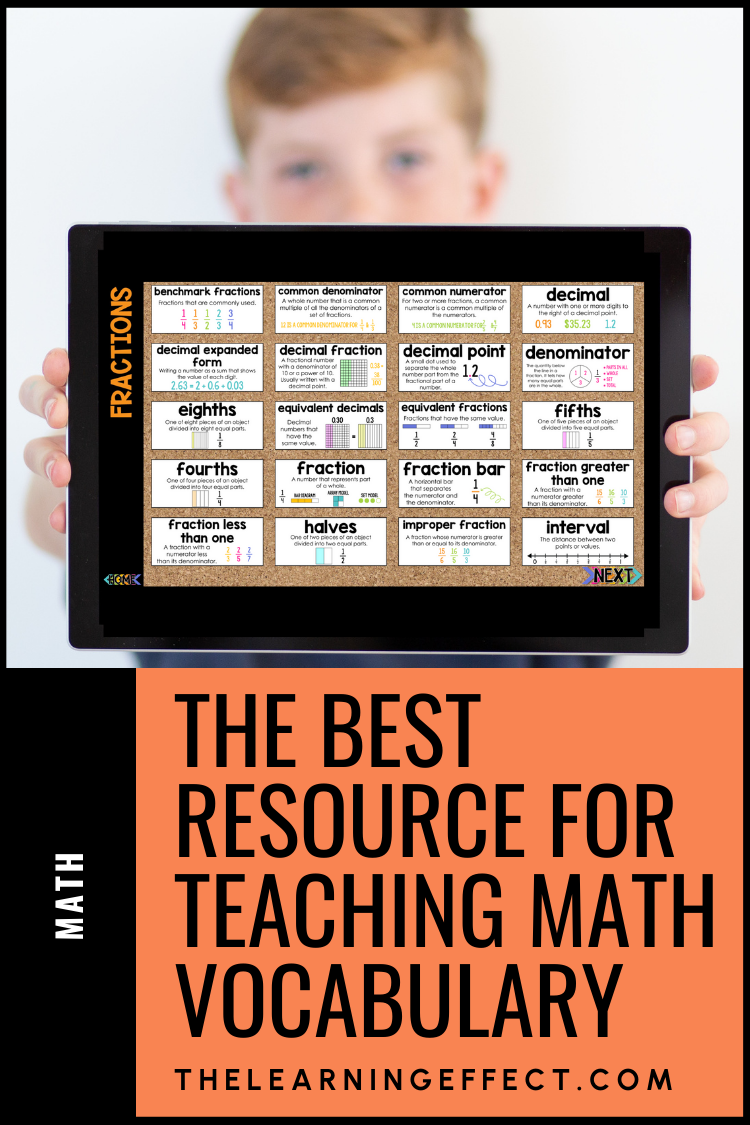
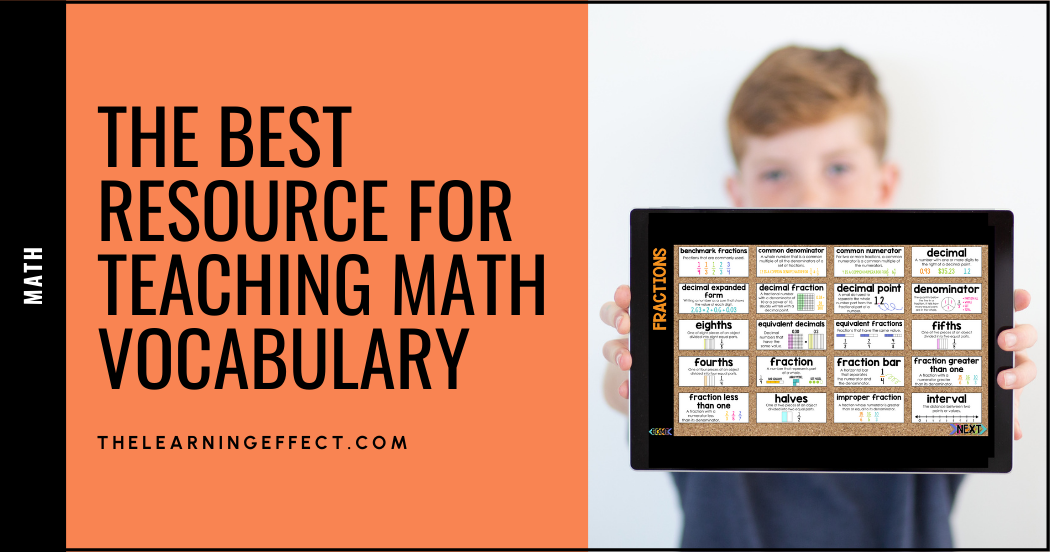
Each vocabulary card featured the word, a clear definition, and a visual example. Those visuals are beneficial for all students – especially ELL learners and students with special needs who benefit from multiple representations of concepts.
I encouraged students to use the math vocabulary word wall whenever they needed to, and I meant it. They could even reference it during tests – a practice that taught them to find answers independently rather than always asking me. (I had simple rules: no bringing your test paper or pencil to the wall, and only one student at a time to prevent talking during assessments.)
This approach helped my students develop a natural tendency to seek out information themselves throughout the school year. And honestly? It saved me from answering “What does _____ mean?” twenty times a day.
Digital Math Vocabulary Word Walls: A Game Changer
The biggest frustration I had with physical word walls was that students couldn’t access them at home. I wanted them to have the same consistent definitions when doing homework or studying for tests, but I wasn’t about to photocopy dozens of vocabulary cards for every student.
Now that schools have embraced digital learning, we can give students access to these resources anywhere they have internet. This is huge – especially if you use spiral review homework where students need to remember vocabulary from earlier in the year.
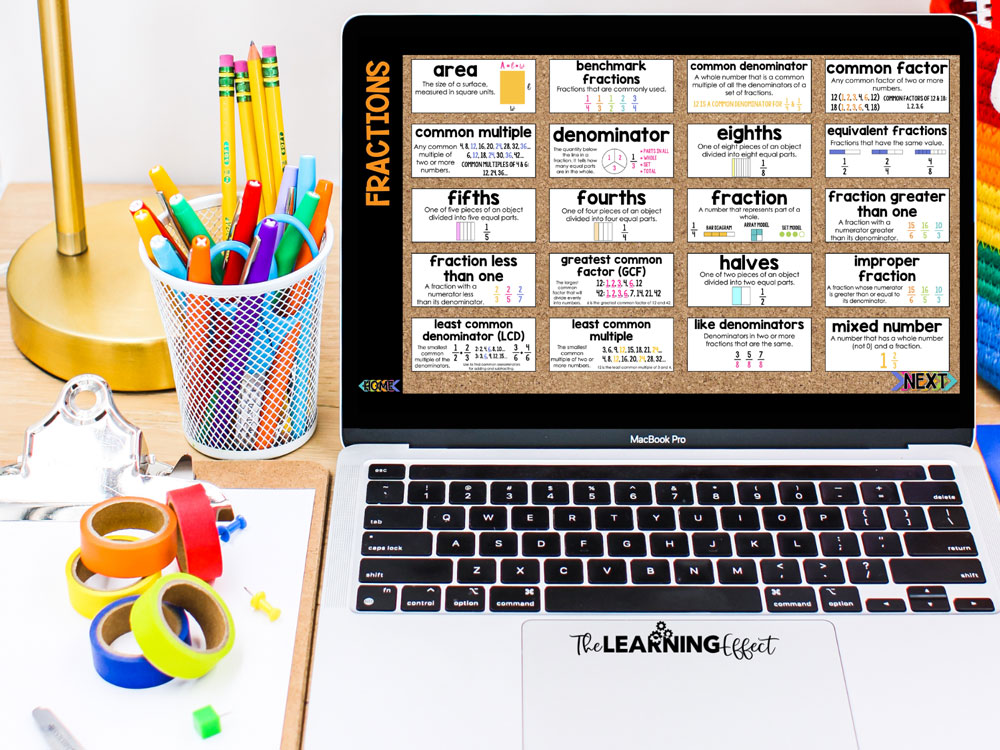
Digital math vocabulary word walls solve this problem beautifully. You can easily recreate your classroom math word wall on a virtual bulletin board that students can access from home. They’ll see the same words, definitions, and examples they reference in class, creating that consistency we know they need.
Plus, you can give students access to all the vocabulary you’ve covered throughout the year and add to it as you go. No more excuses about forgotten math notebooks. If students have internet access, they have their word wall.
How to Use Digital Word Walls
Setting up a digital word wall is simpler than you might think. First, decide how you want to organize it:
Option 1: All vocabulary at once
Give students access to every term from day one. Most digital word walls have clickable navigation that lets students easily find what they need. Just preview the words first and remove any that aren’t relevant to your curriculum.
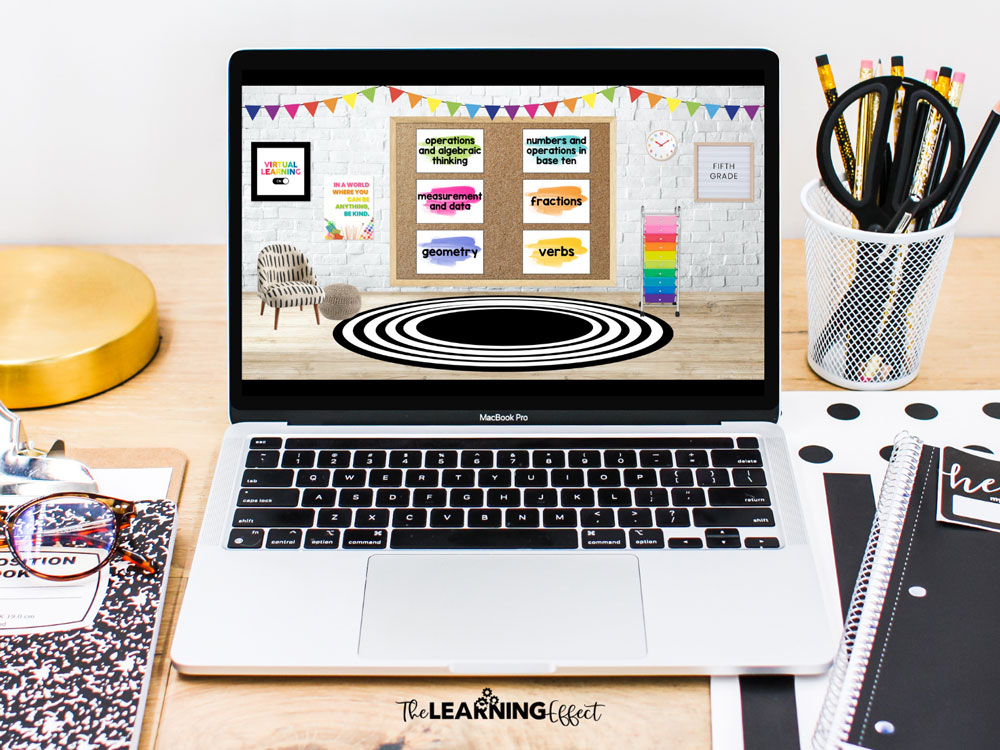
Option 2: Build it as you teach
Start with a few essential terms and add more throughout the year. You can hide cards you’ll introduce later by moving them off to the side of the slide, out of view, then drag them back when you’re ready to teach that concept.
When you’re ready to share your word wall with students, you have several options:
- Save as a PDF – The clickable functionality stays intact, making this perfect for schools that don’t use Google Apps
- Share via Google Classroom – Set the file to “view only” so students can access it but not edit it
- Embed in Google Sites – If you have a class website, you can embed the word wall right on a page for easy access
Ready-to-Go Math Vocabulary Resources
I created printable and digital math vocabulary word walls for grades 3-6 because I wanted teachers to have something comprehensive and customizable. I pulled terms from multiple states’ standards to cover as much ground as possible, but you can still pick and choose which words work for your classroom.


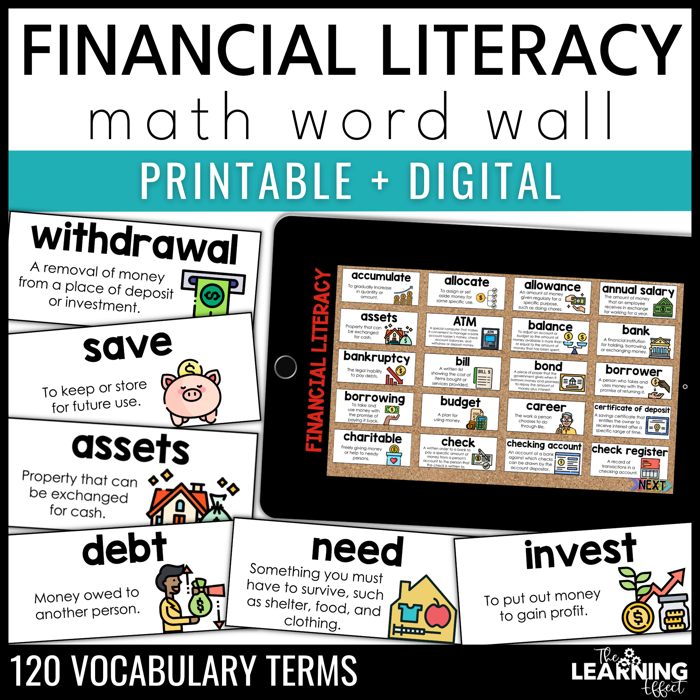
Whether you teach 3rd, 4th, 5th, or 6th grade, having a ready-to-go math vocabulary system saves you hours of prep time and gives your students the consistent reference tool they need. I also have a financial literacy word wall available, and you can grab everything as a bundle if you teach multiple grade levels or want to plan ahead.
Math vocabulary instruction doesn’t have to be complicated. With the right tools in place, your students will have everything they need to tackle word problems, ace their tests, and actually understand the math they’re doing – not just memorize procedures.
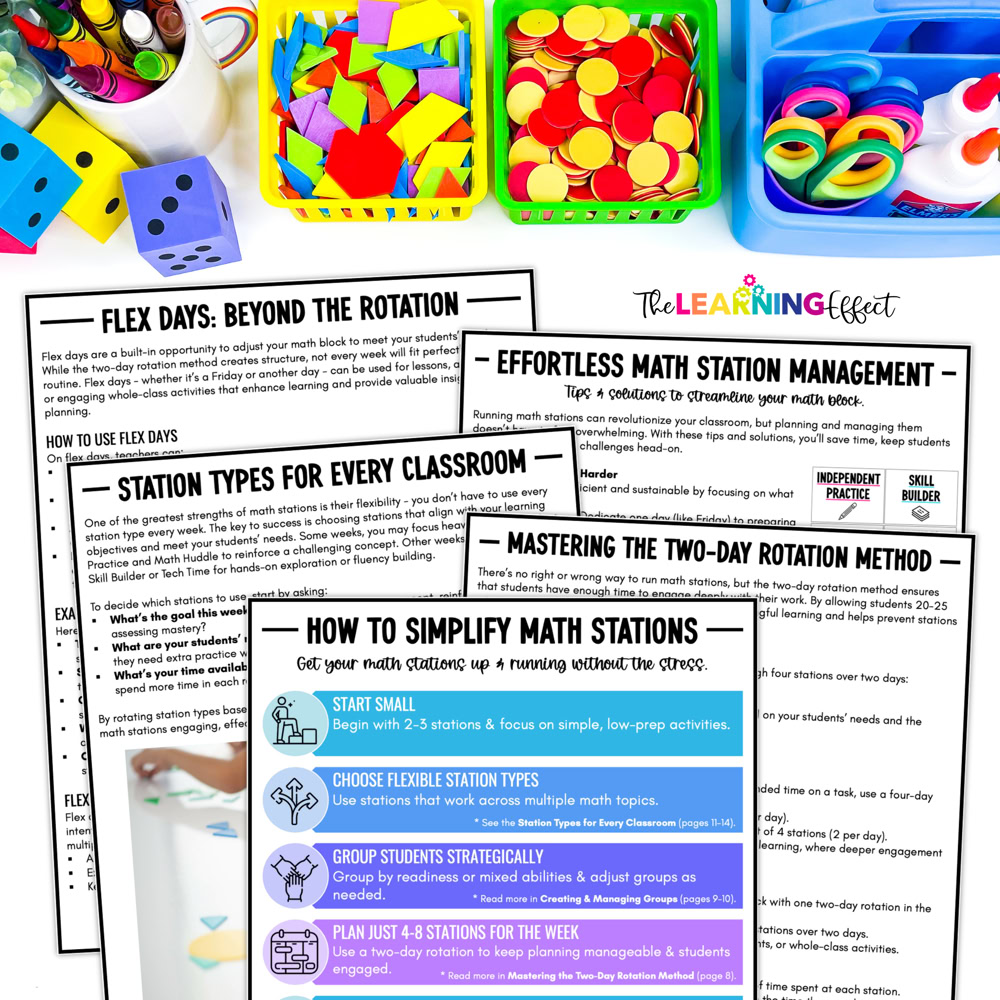
Want more ways to make math engaging and manageable? Grab my free Math Stations Made Simple guide for practical strategies you can implement right away.