Looking for effective ways to practice fractions that will actually engage your 4th and 5th graders? You’re in the right place.
Picture this: You’re explaining equivalent fractions for the third time this week, and you can practically see the glazed looks spreading across your students’ faces. Sound familiar?
I’ve been there too. After years of teaching upper elementary, I’ve learned that the best ways to practice fractions aren’t found in more worksheets or repetitive drills. It’s about making fractions feel real, relevant, and fun.
Here are three creative ways to practice fractions that have completely transformed how my students approach this tricky concept. Best part? They work for both 4th and 5th graders, and none of them require hours of prep time.
Use Concrete Examples: Make Fractions You Can Touch
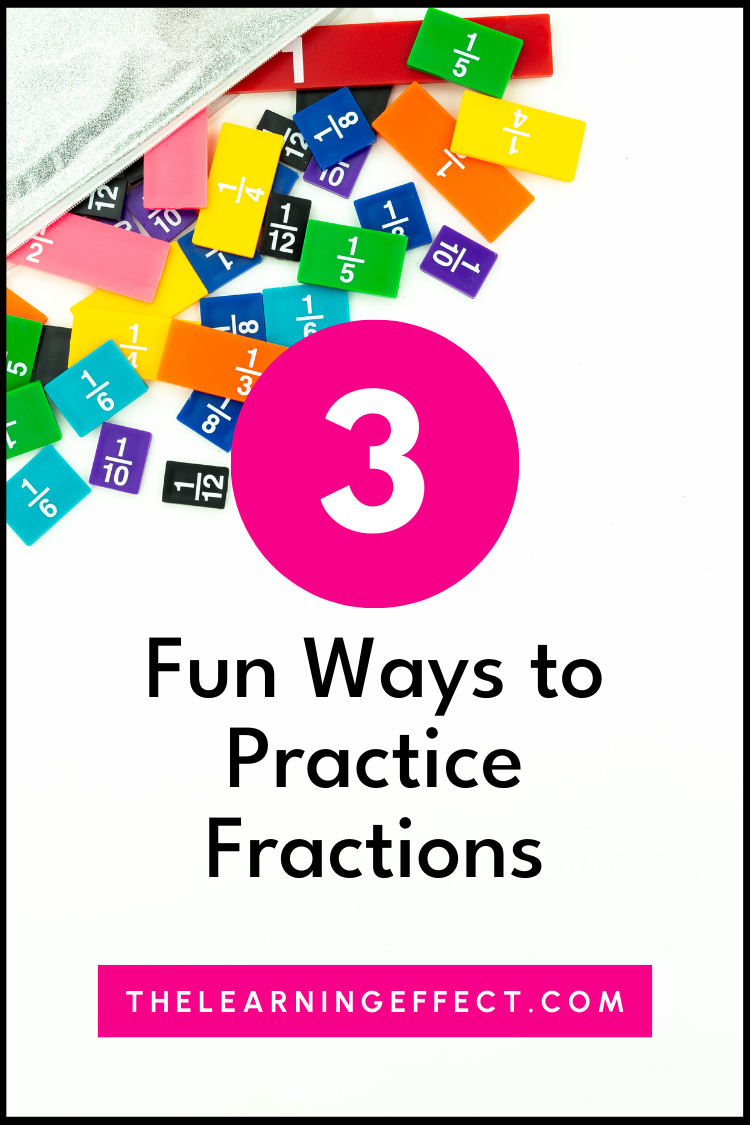
One of the most effective ways to practice fractions is starting with objects your students can actually see, touch, and manipulate. When fractions exist in the real world instead of just on paper, everything starts to click.
Here are some hands-on ways to practice fractions that require minimal prep:
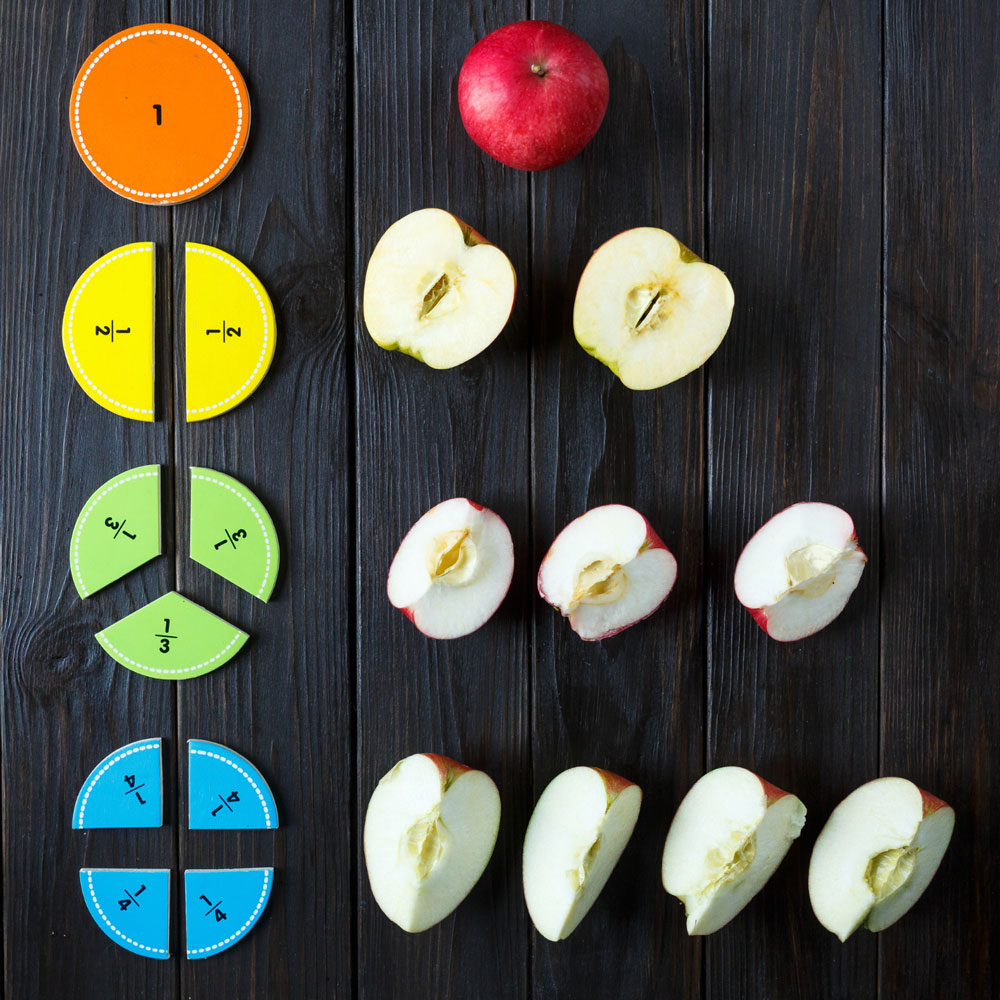
Food Fractions – Cut apples into halves and quarters, then have students count the pieces. Pizza slices work amazingly well too (I use construction paper pizzas that students can physically move around to show that 2/8 equals 1/4).
Money Connections – Use coins to show fraction relationships. A quarter represents 1/4 of a dollar, a dime is 1/10, and so on. Students love this real-world connection because they use money outside of school.
Measuring Cup Magic – Demonstrate different volumes using actual measuring cups. Pour water from a 1/2 cup into two 1/4 cups, and watch the lightbulbs go off.
💡 Pro tip: Start with halves and quarters before moving to more complex fractions. Once students master these basics, they’re ready for anything.
The beauty of concrete examples is that students can replicate these activities at home. They’ll start seeing fractions everywhere – from the apple slices in their lunch to the measuring cups in their kitchen.
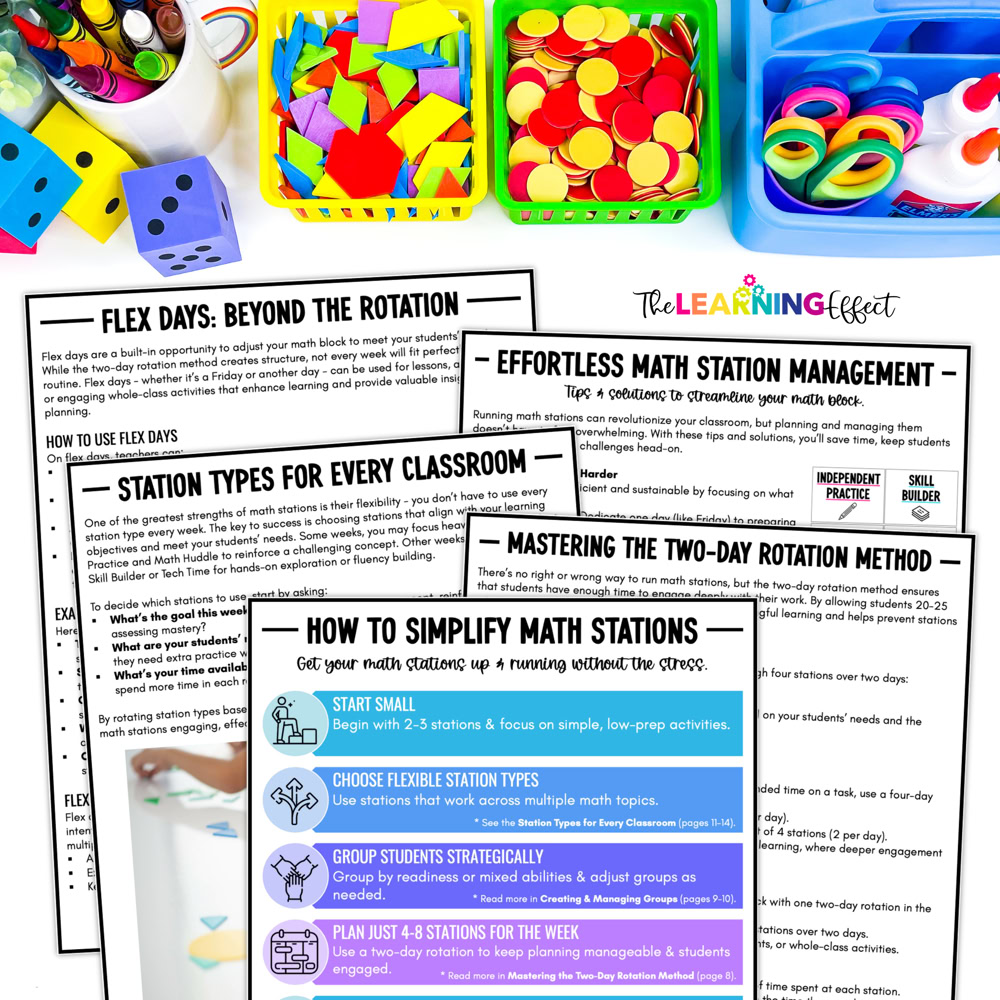
These hands-on fraction activities work perfectly in math stations too. When students rotate through different fraction manipulatives and concrete examples, they get multiple opportunities to practice without you having to re-teach the same concept over and over.
Want to set up effective math stations without the overwhelm? My Math Stations Made Simple guide shows you exactly how to organize fraction practice stations that practically run themselves – grab your free copy and simplify your math planning today.
Project-Based Learning: Real-World Ways to Practice Fractions
Once your students are comfortable with concrete examples, it’s time to help them see how fractions work in real-world situations. This is where project-based learning becomes your secret weapon.
Instead of isolated practice problems, students work with fractions while solving meaningful challenges. They’re so focused on the project that they forget they’re “doing math” – until they realize how much they’ve learned.
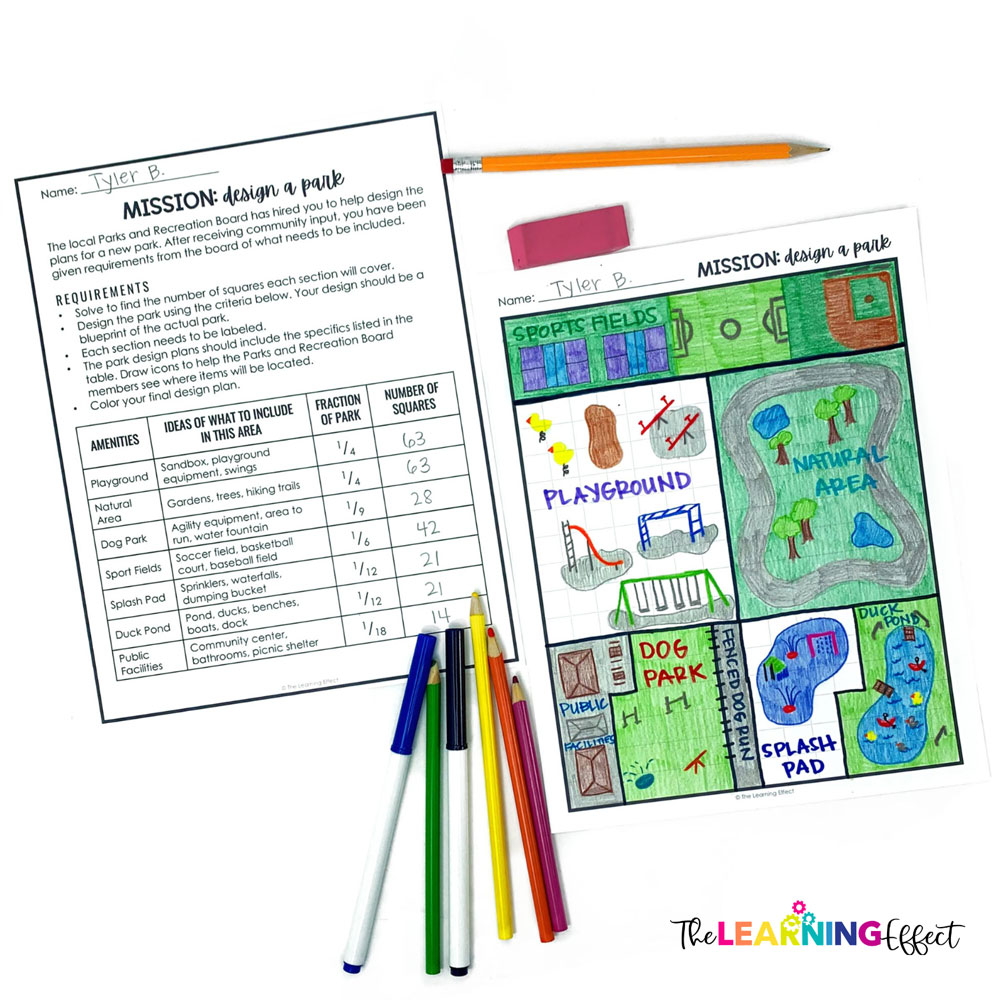
One of my favorite activities is Mission: Design a Park, where 5th graders practice multiplying fractions by whole numbers. Students become park designers, using fractions to calculate space requirements for different amenities. They might determine that the playground needs to be 1/4 the park, then figure out how much space is needed for two separate playgrounds. This is an engaging PBL activity that your students will enjoy from start to finish.

The key is choosing projects that feel authentic. When students see fractions as tools for solving real problems rather than abstract concepts to memorize, their understanding deepens naturally.
Engaging Whole Class Games for Fraction Practice
Individual practice is important, but don’t underestimate the power of whole-class fraction games. These activities create energy in your classroom while giving you perfect opportunities to model problem-solving and address common mistakes.
Fraction Bingo is always a hit. Create cards with different fraction problems – converting improper fractions to mixed numbers, simplifying fractions, or finding equivalent fractions. Students solve the problems as you call them out. You’d be amazed at how focused they become during games like this!
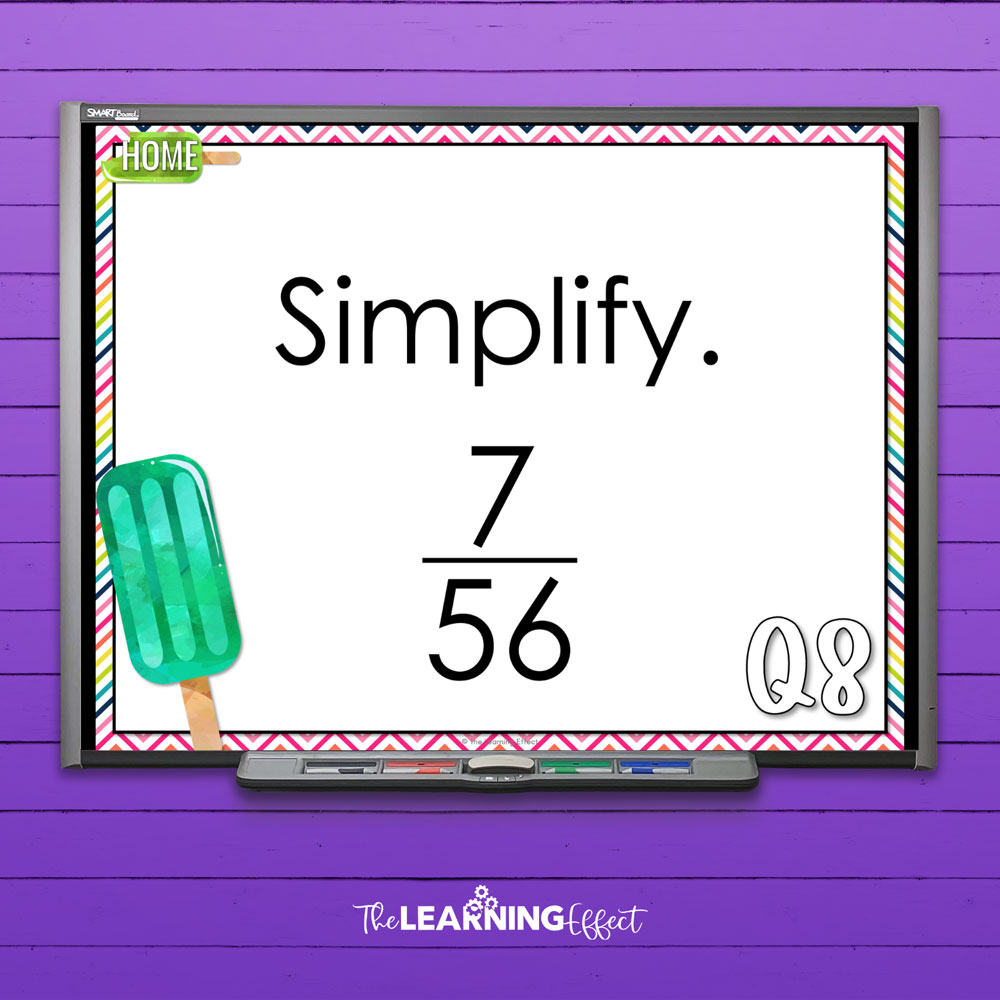

Math Game Shows like Jeopardy work wonderfully for fraction review. Divide your class into teams and watch them collaborate to solve fraction challenges. The competitive element keeps everyone engaged, even students who typically struggle with math confidence.
Getting Started: These games work perfectly during those tricky transition times – right before lunch when attention spans are fading, or as a Friday afternoon treat that’s still educational.
The best part about whole-class games? They give you immediate feedback about who’s getting it and who needs extra support, all while maintaining that fun factor that keeps students wanting more.
Making It Work in Your Classroom
These three strategies have been game-changers in my classroom, and I know they’ll work for you too. The secret is mixing up your approach – some days go hands-on with concrete examples, other days dive into project-based learning, and when you need to energize the whole class, break out those games.
Your students will start seeing fractions everywhere, from the pizza slices at lunch to the time remaining in recess. And isn’t that exactly what we want? Math that feels natural, relevant, and actually enjoyable.
Ready to dive deeper into fraction instruction? Check out 70+ Resources to Help You Teach Fractions for even more activities, games, and teaching strategies that make fractions stick.