Ready to plan for back to school without the overwhelm? These five simple steps will help you get organized and set up for success – without sacrificing your entire summer.
Planning for back to school was always my favorite task – a clean slate, excited students, and fresh supplies ready to go. The best part? You can knock out the essentials over summer without it taking over your entire break. Your future self will thank you!
TIP 1 | Organize Your Teaching Resources by Subject and Unit
For a long time, I only kept my teaching resources digitally. Then once I moved to a school where we had a secretary who did all of the copying for us, it made more sense to keep master copies in binders. I could pull resources for copies quickly and didn’t waste time searching through large files hoping to find that one activity for ecosystems.
QUICK TIP – A way to make sure that you always get your master copy back in the binder is to mark it with a highlighter. The highlighter won’t show on the copies.
I organized my copies in binders by subject and unit. To keep everything in order, I made binder covers and spines so I’d know what was inside without pulling every binder out.
TIP 2 | Plan for Back to School Success with Curriculum Mapping
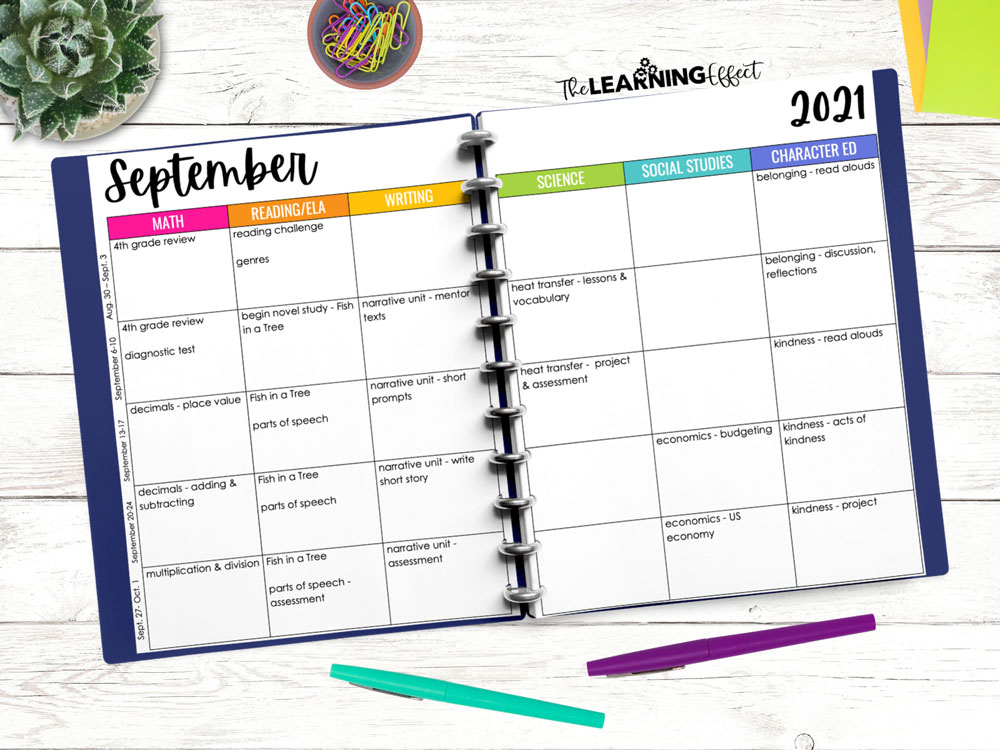
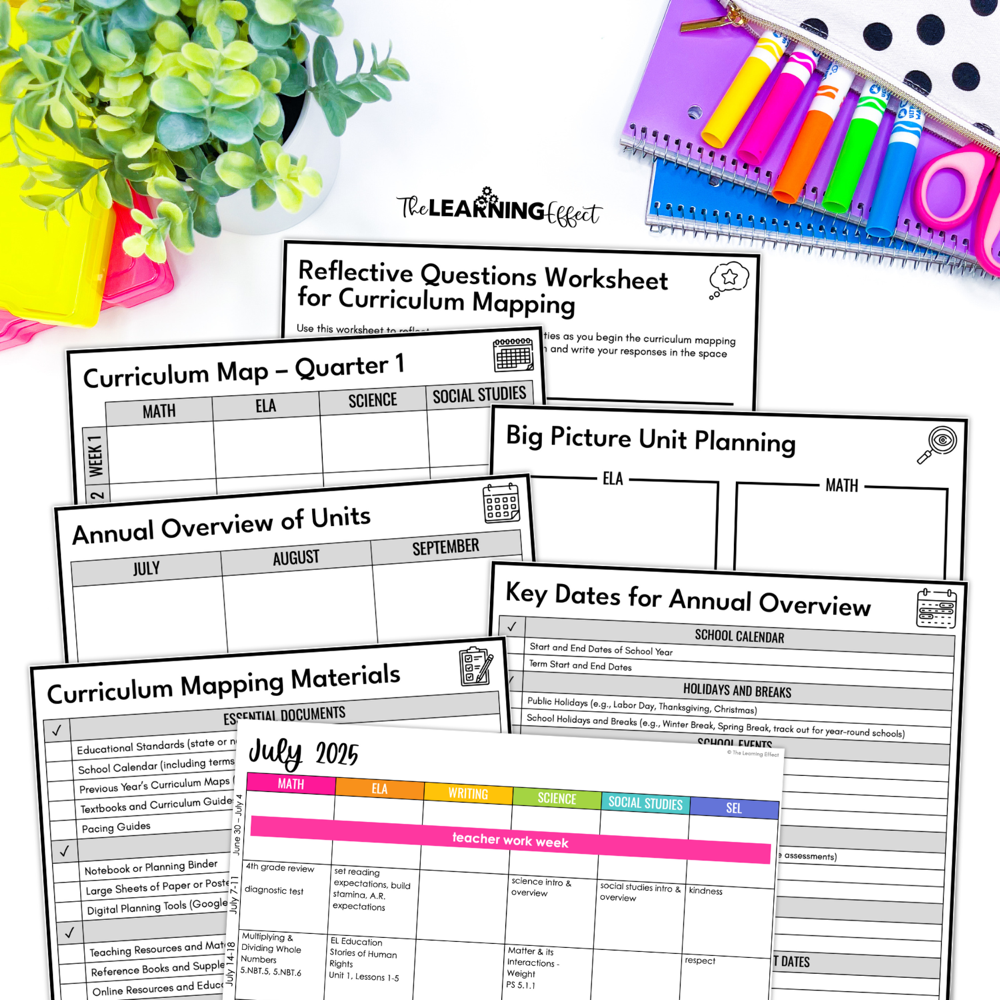
Curriculum mapping or creating a pacing guide was always my favorite thing to do over the summer. Throughout the year, I’d make notes in my planner for something that I’d like to change, try, or keep the following year. This helped me reflect and plan each year to improve my teaching and get some big picture planning done.
A curriculum map isn’t set in stone – it’s a guide to help you pace each unit so you can cover everything by year’s end (or before testing season). Some districts provide one, but they’re often overwhelming with too much information. Creating your own streamlined version helps you break down content into manageable chunks.
Want to learn more about creating an effective curriculum map? Check out my post on Curriculum Mapping for Teachers: A Complete Guide.
Ready to create your own curriculum map? Download my free Curriculum Mapping Guide to get step-by-step instructions and a template that makes pacing out your year simple and stress-free.
TIP 3 | Use Monthly Calendars to Track Important Dates
Once the events, assemblies, meetings, student birthdays, etc., started rolling in, I’d pull out my monthly calendars and transfer the content over. I’m the type of person who needs to look at things on a calendar, not just on a typed up list of dates.
I used my monthly calendars to update my class website and inform parents about upcoming events in our class newsletter. At the end of the year, when there were too many things to keep track of – testing dates, assemblies, graduation practice, class picnic, etc. – I’d use the one-page calendar to share everything with parents. They always appreciated seeing the dates laid out rather than listed.
TIP 4 | Choose a Weekly Planning Method That Fits Your Style
Weekly planning was always a Sunday thing for me when I had to plan on my own. Once I had a team of teachers to work with, we planned together every Wednesday morning during our PLT and sometimes during our prep period. I preferred to handwrite my plans, so I used printed weekly planning pages.
If I were to go back into the classroom now, I’d probably use Google Slides to plan digitally because I seem to misplace everything these days. (Mom brain.)

TIP 5 | Build a Teacher Planner That Keeps Everything in One Place
If you’re anything like me, you want one place to keep things. The simpler, the better. I started creating my own teacher planner in 2012 because I wasn’t a fan of spending $50+ for a beautiful planner that I could not fully utilize for the cost.
I love customizing all the pages, like adding my subjects or schedule times on the weekly planning pages before printing. Adding extras like emergency plans, student ID numbers, and transportation lists was a huge bonus, too!
I like binding my planner together with the discbound system, but binders work, too. And now, with all the capabilities of Google Slides, I’d even be happy planning digitally if I were in the classroom right now.
Ready to Put All These Systems Together?
If you love these planning strategies but feel overwhelmed trying to figure out how to implement them all, I’ve got you covered. The Ready, Set, Teach! Planning System walks you through setting up every planning system you need – from curriculum mapping to weekly routines to mid-year refreshes – so nothing falls through the cracks.
Inside, you’ll get:
- 8 comprehensive modules covering every season of the school year
- 60+ done-for-you planning tools, templates, and printables (including curriculum maps, weekly planners, and calendars)
- Step-by-step guidance for building routines that actually stick
- Mid-year refresh strategies for when motivation dips
Instead of piecing together random templates and hoping they work, you’ll have a complete system that supports you from August through June. No more Sunday night scrambling or reinventing the wheel every year.

Start Planning for Back to School Today
Planning for back to school doesn’t have to be stressful or time-consuming. By tackling these five areas over the summer, you’ll walk into your classroom feeling confident, organized, and ready to make it your best year yet. Pick one tip to start with this week, and before you know it, you’ll have a system that works beautifully for you and your students.