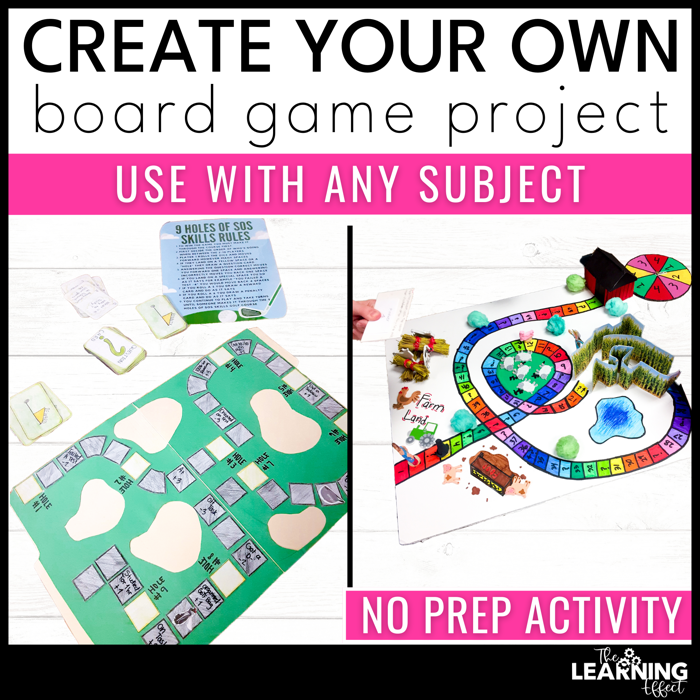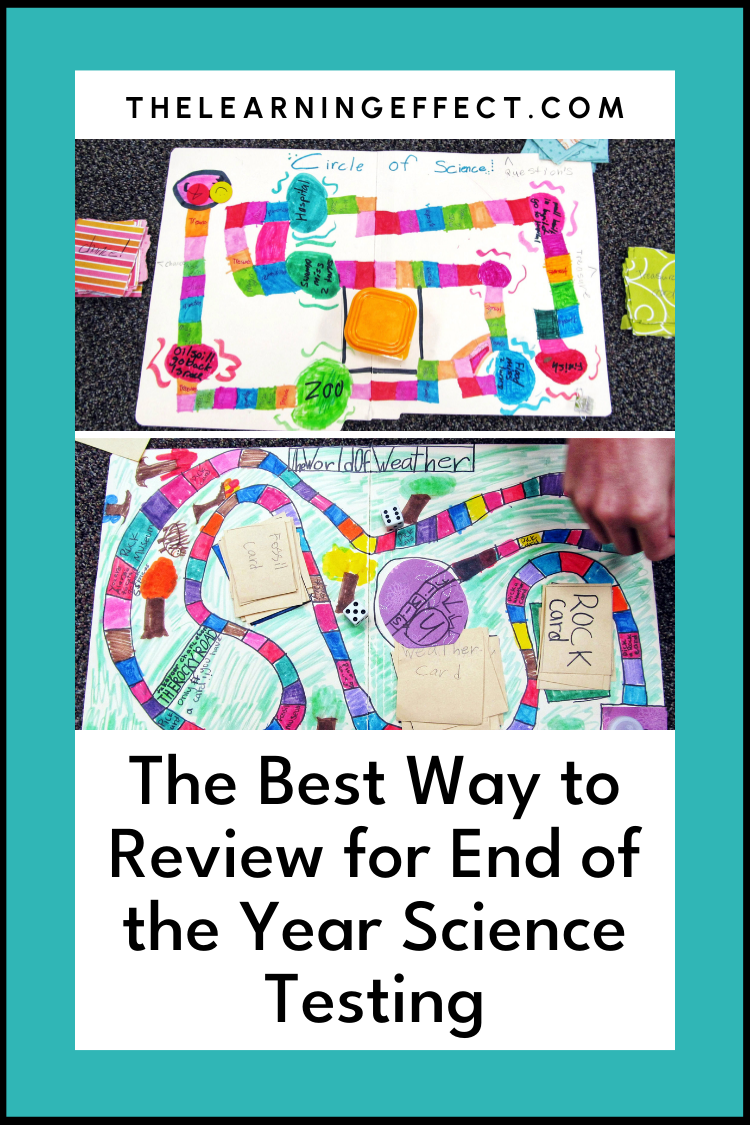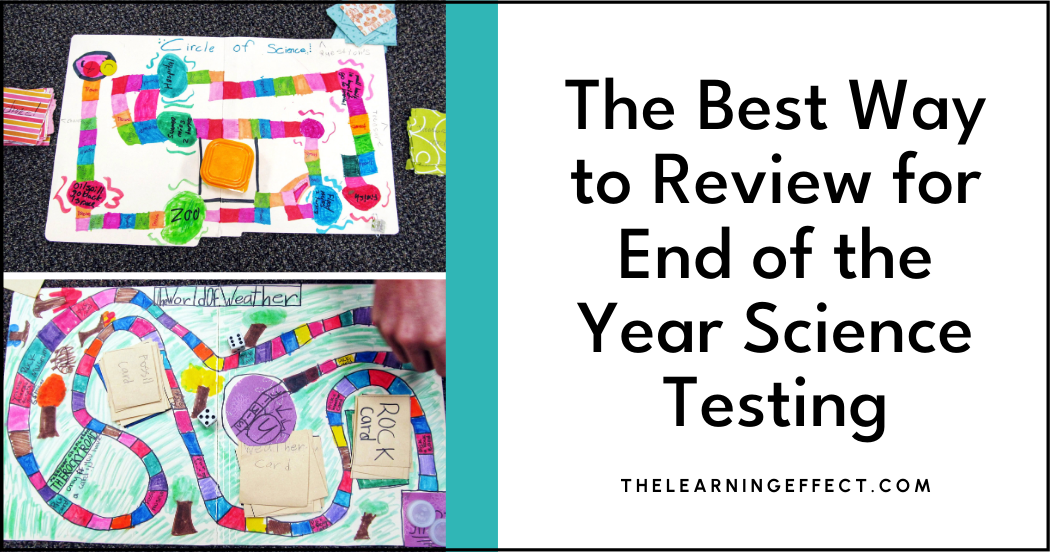
Looking for a test prep activity that actually gets students excited? Science board games are the answer. When my 4th graders created their own review games, they were completely engaged – and they retained content far better than with traditional review packets. Here’s how you can use student-created science board games to make test prep productive, fun, and surprisingly low-prep for you.
Why Science Board Games Work for Test Review
Before I tried student-created science board games, test review meant packets, flashcards, or Jeopardy-style games that honestly left me exhausted. But when students design their own board games, something magical happens. They’re not just recalling information – they’re analyzing, synthesizing, and teaching each other.
Here’s why science board games are worth the class time:
Students take ownership of the content. When they’re writing questions and creating game mechanics, they have to really understand the material. I watched students debate whether a question was too easy or if an answer needed more detail. That’s the kind of thinking we want!
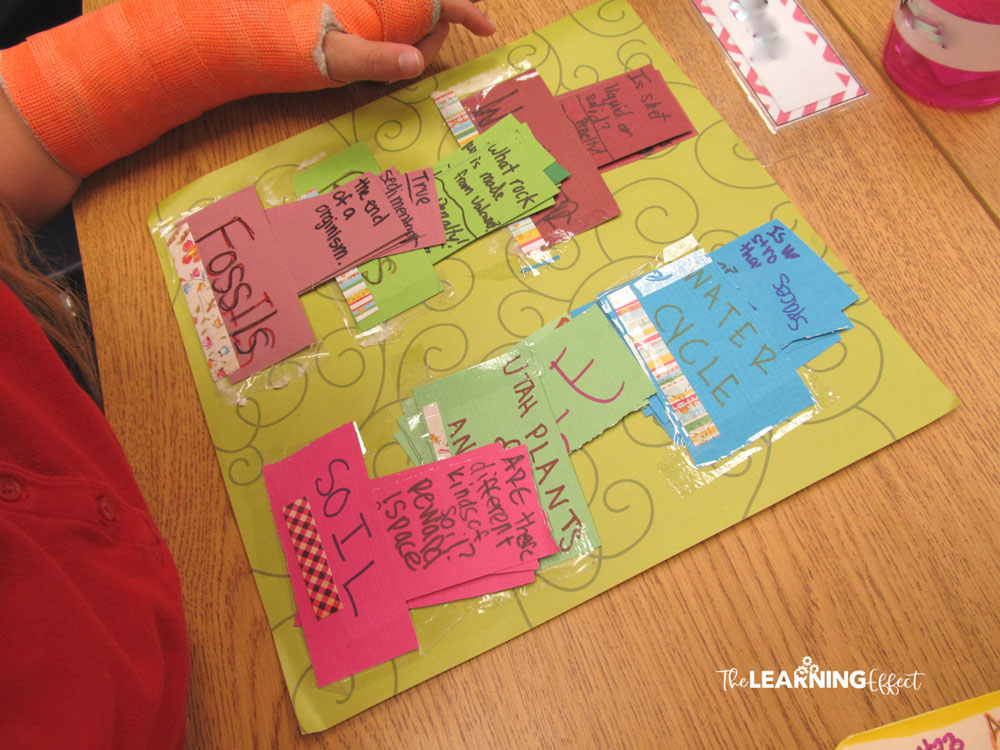
It covers multiple topics efficiently. Instead of reviewing one unit at a time, science board games let students integrate everything they’ve learned. My requirement was simple: include at least 5 questions from each of our 6 science units (water cycle, weather, fossils, rocks and minerals, Utah’s environments, and soil).
The prep work is minimal. Once you gather basic supplies and create your rubric, students do the heavy lifting. You’re facilitating creativity, not creating 30 different review activities.
Games are reusable. Store these science board games and pull them out for centers, indoor recess, or when you have a substitute. They’re gifts that keep giving.
How to Set Up Student-Created Science Board Games
Here’s the step-by-step process I used, and you can adapt it for whatever science content your students need to review:
1. Set clear content requirements I required at least 5 questions from each of our 6 science topics. This ensured comprehensive review without being overwhelming. You might adjust based on how many units you’ve covered. The key is giving students a target so they don’t just focus on their favorite topic.
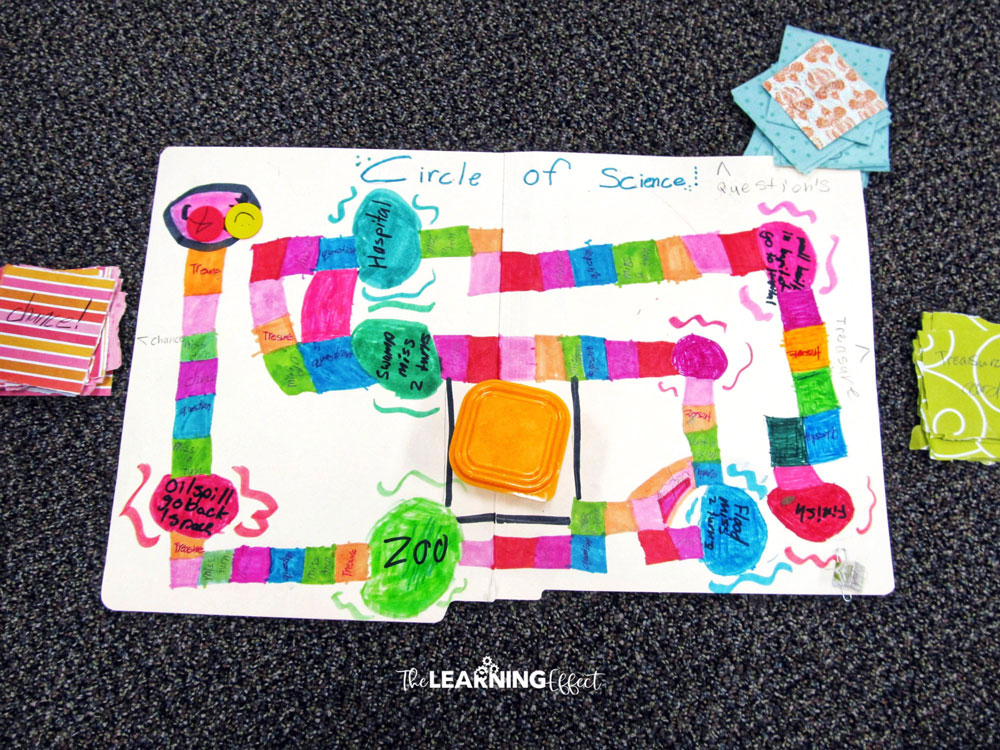
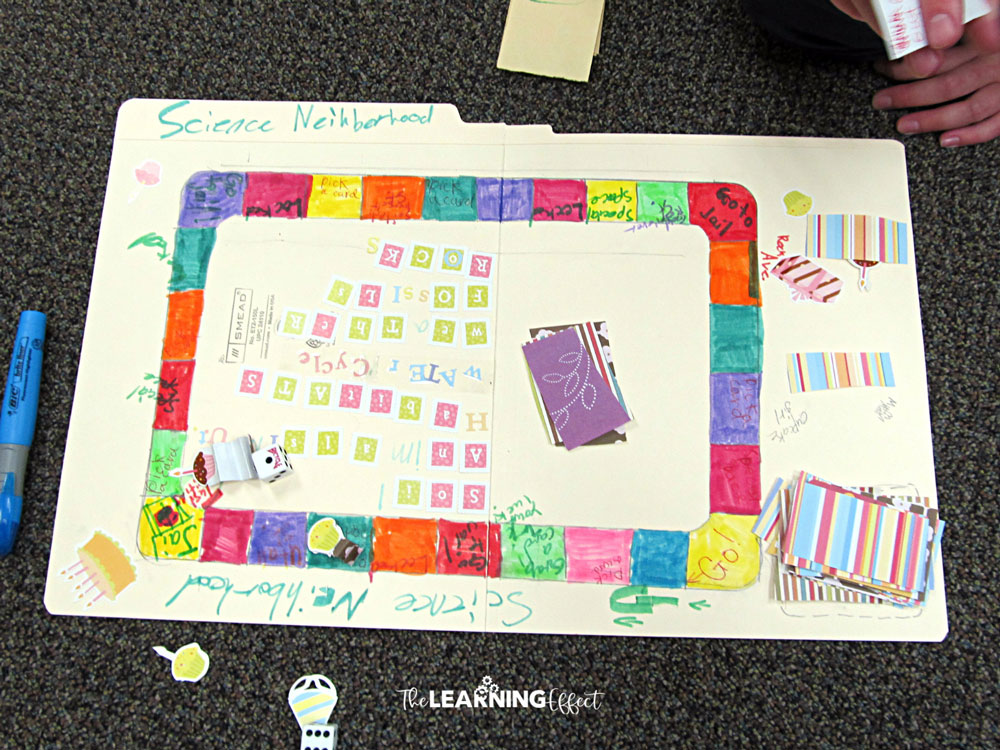
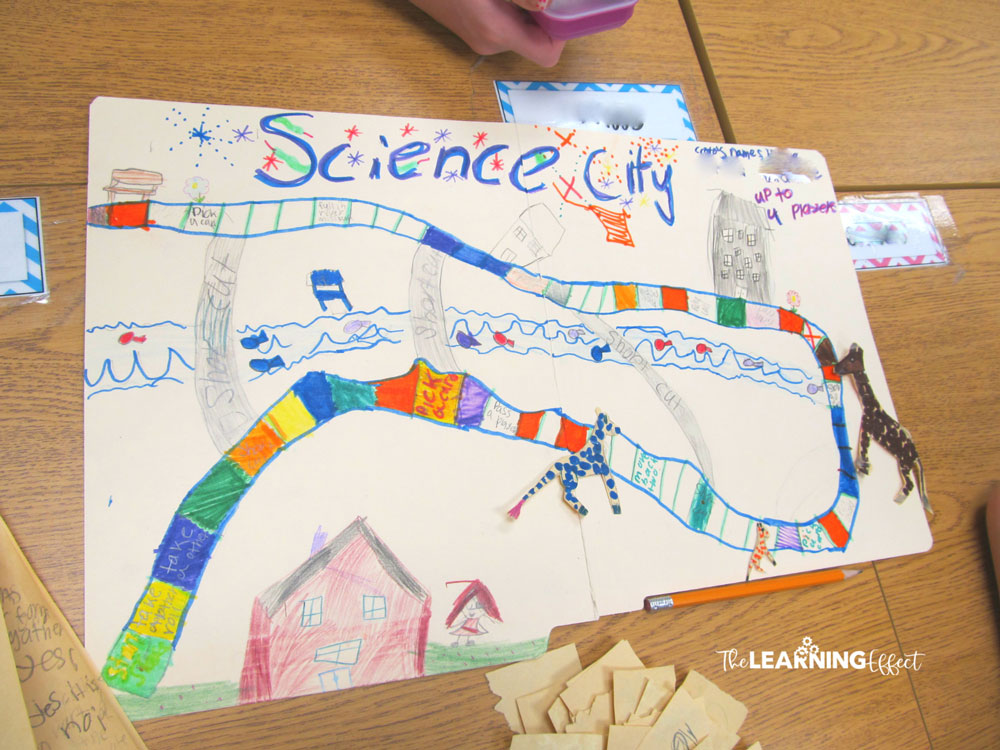
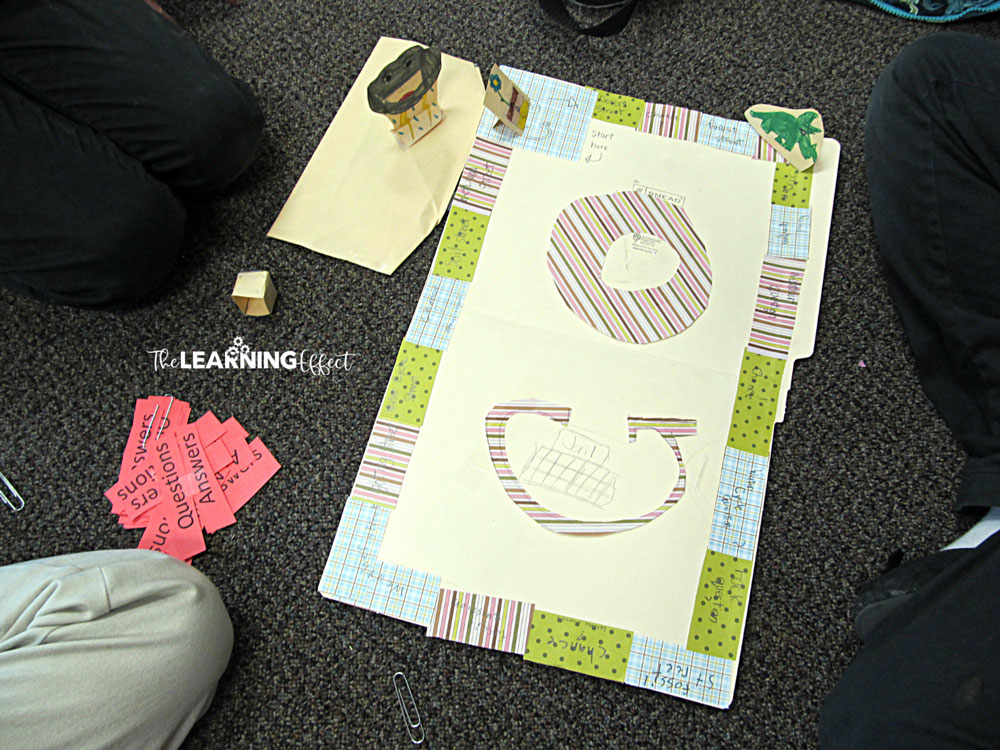
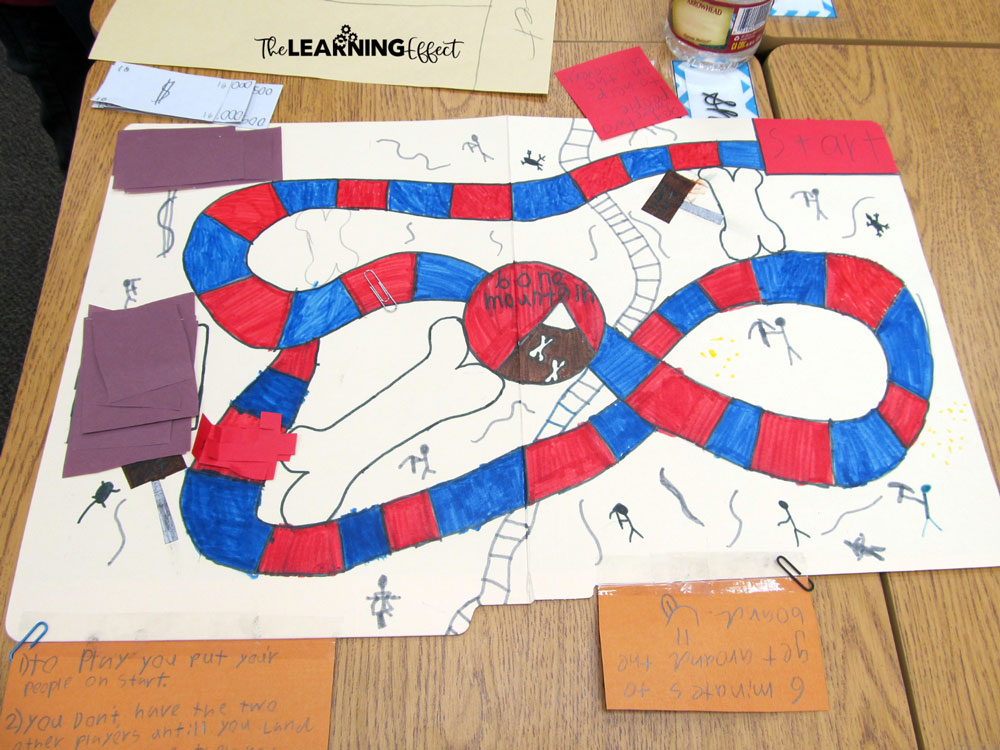
2. Gather basic materials I provided legal-size file folders as the game board base – they’re sturdy and fold up nicely for storage. Then I opened up my supply closet and let students choose from markers, colored pencils, scrapbook paper, index cards, paperclips, and binder clips. Some groups brought materials from home, which added even more variety.
3. Create groups of 2-3 students This size works perfectly for science board games. Pairs sometimes struggle if one person dominates, and groups of four often have someone disengaged. Three is the sweet spot – everyone has a role.
4. Plan for three class periods
- Day 1: Planning and question writing
- Days 2-3: Creating boards, game pieces, and play-testing
Pro tip: Have students create answer keys on the back of their question cards. This makes peer checking and independent play so much easier.
5. Use a rubric for assessment I graded their science board games using a rubric that focused on content accuracy, creativity, and whether the game actually worked. This kept expectations clear and made my grading manageable.
What Students Created (And What Made Their Science Board Games Work)
The creativity I saw absolutely blew me away. Let me share a few examples:
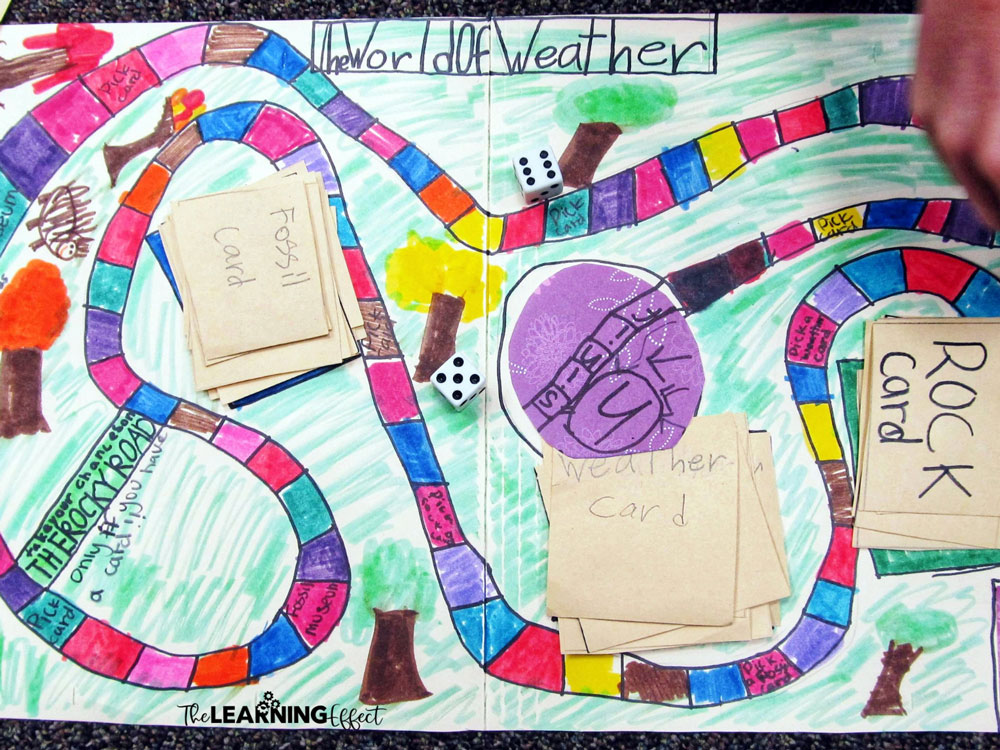
One group created a space-themed board where you moved planets around the sun, and landing on different planets triggered questions from specific science topics. They even made a “meteor” card that sent you backward – students had to answer an extra-hard question to continue.
Another team designed a rock cycle game where your game piece was literally a rock that transformed as you moved through the board. Sedimentary to metamorphic to igneous – the game mechanics matched the content. Brilliant!
My favorite might have been the weather board game that looked like a meteorologist’s map. Different weather patterns sent you different directions, and you had to answer weather-related questions to “predict” your next move correctly.
What made these science board games effective wasn’t just that they looked good (though many did!). It was that students had to think deeply about their content to create game mechanics that made sense. They were teaching themselves while they built.

Materials Students Used for Their Science Board Games
You don’t need anything fancy for this project. Here’s what my students used most:
- Legal-size file folders (the game board base)
- Scrapbook paper for decorating
- Index cards for question cards
- Markers and colored pencils
- Small objects from home for game pieces (buttons, plastic animals, erasers)
- Dice (we had a classroom set, but students also made spinners)
- Paperclips and binder clips to hold cards together
The beauty of science board games is that they work with whatever supplies you have available. One group used sticky notes as their question cards because that’s what they found. It worked perfectly!

Tips for Making Science Board Games Even More Successful
After running this project several times, here are a few things I learned:
Build in playtesting time. On day 3, I had groups swap games and actually play them. Students caught unclear instructions, impossible questions, and game mechanics that didn’t work. They made quick fixes before turning them in.
Encourage questions beyond recall. Early on, I noticed some groups writing simple yes/no questions. I challenged them to write questions that required explanation: “Describe how the water cycle and weather are connected” instead of “Is rain part of the water cycle?”
Display the finished games. These science board games are beautiful! I displayed them in the hallway before students took them home, and it generated so much excitement from other classes.
Save a few games for your classroom library. With parent permission, keep 2-3 games to use as center activities throughout the year. Future students love playing games created by “real kids.”
Connect to other content areas. Once students see how fun creating board games can be, you can use this strategy for math review, vocabulary practice, or social studies. Check out my post on Create Your Own Board Game: A Fun End of the Year Activity for more ideas.
Science Board Games: Results and Student Engagement
Let’s be honest – test prep can feel like a slog. But this activity completely changed the energy in my classroom. Students who typically disengaged during review were asking if they could work through lunch. They wanted to make their games perfect.
The best part? When test day arrived, I overheard students whispering, “Oh, this was on our game!” They remembered the content because they’d invested in it.
Science board games took three class periods, but they replaced at least a week of traditional review. And unlike worksheets that go straight into the recycling bin, these games stuck around. Students asked to play them during indoor recess, and several parents told me their kids were playing at home with siblings.
If you’re looking for a review activity that’s actually engaging, give student-created science board games a try. Your students will surprise you with their creativity, and you might actually enjoy test prep season.

Frequently Asked Questions About Science Board Games
How long does it take to create science board games? Students typically need three class periods. Day one focuses on planning and writing questions. Days two and three are for building, decorating, and playtesting. Some groups finish early and can play-test with another group.
What if students create games that don’t work? That’s part of the learning! Build in playtesting time where groups swap games. Students quickly identify problems and make adjustments. It’s actually a great problem-solving exercise.
Can this work for other subjects besides science? Absolutely! I’ve used student-created board games for math review, vocabulary practice, and social studies. The process is the same – just adjust your content requirements. For more ideas on using board games across subjects, check out my post on 5 Math Review Games for Elementary Students.
What materials are essential for science board games? You really just need file folders and something to write with. Everything else is bonus. Students are incredibly resourceful and will create engaging games with basic supplies.
How do you grade science board games fairly? I use a rubric that focuses on three main areas: content accuracy (Did they meet the question requirements? Are answers correct?), creativity (Is the game visually appealing and original?), and functionality (Does the game actually work?). This keeps grading objective and manageable.
Take Your Science Review Further
Want to extend this project even more? Students can research science topics independently to write even stronger questions for their board games. Grab my free Online Kid-Friendly Science Research Guide to give students vetted websites and research strategies they can use on their own.

Ready-Made Resources for Science Board Games
Because this was such a hit with my students, I created a Create Your Own Board Game resource that includes everything you need: student planning sheets, question templates, rubrics, and instruction cards. It takes the guessing out of implementation so you can focus on watching your students’ creativity shine.