How do you handle the student who always has a comment during your lessons? What about the student who needs to go to the bathroom ten times during testing? If you’re nodding along, classroom hand signals might just save your sanity – no matter what grade level you teach.
This simple communication system transformed my teaching and saved countless hours of class time! Classroom hand signals improved my classroom management immensely, and my administrator was always impressed with how smoothly my lessons ran. I could easily distinguish between a question, answer, and comment (and save those off-topic stories for later!).
Why Classroom Hand Signals Work in Upper Elementary
In my first year teaching, I quickly learned that upper elementary students are connection-making machines. They have thoughts, questions, and stories about everything – and they’re not shy about sharing them. If one student asked to go to the bathroom or get a tissue, suddenly everyone needed the same thing.
I realized I needed a way for kids to communicate with me quietly without disrupting our learning flow. That’s when classroom hand signals became my secret weapon.
I thought about all the reasons students typically raise their hands: questions, comments, answering, bathroom breaks, getting drinks or tissues, sharpening pencils, and asking for help. So many different needs, but during a lesson, I often only had time to call on students who were actually answering my questions.
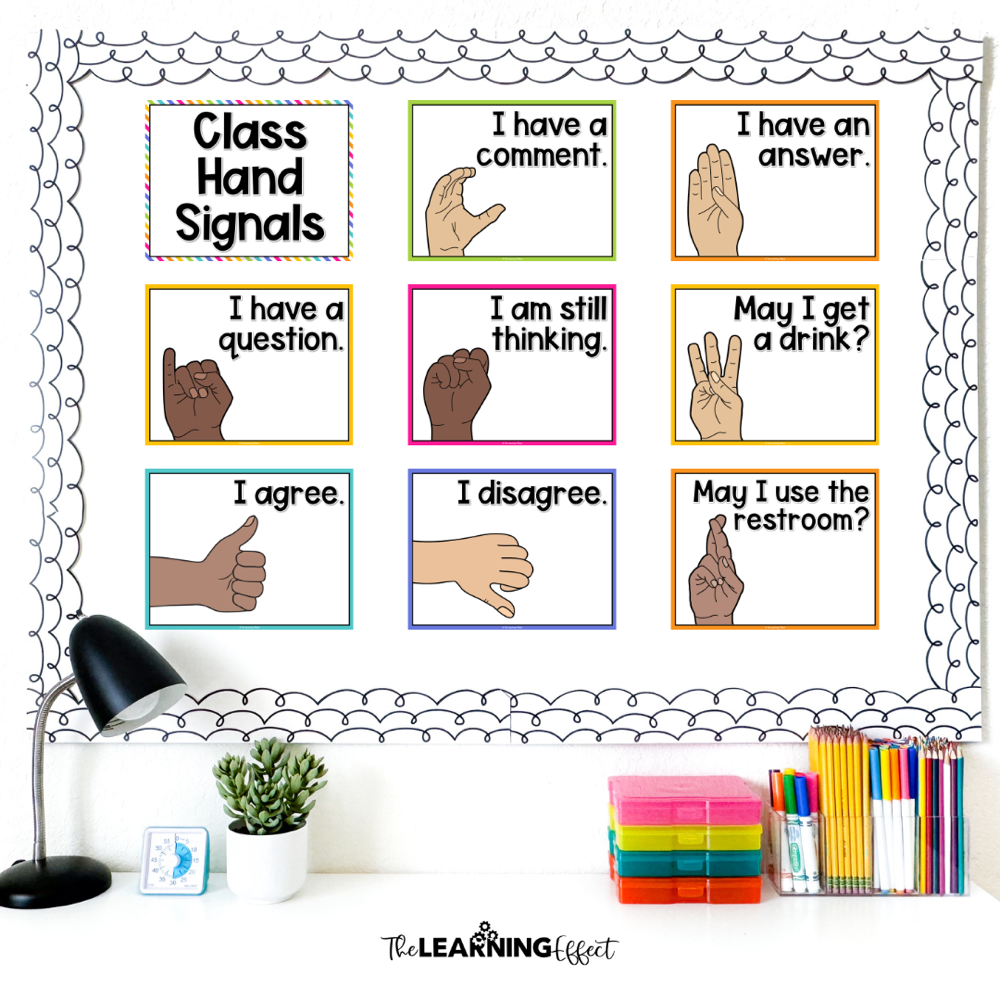
Essential Classroom Hand Signals Every Teacher Should Use
Here are the most effective hand signals I used in my upper elementary classroom:
Basic Communication Signals:
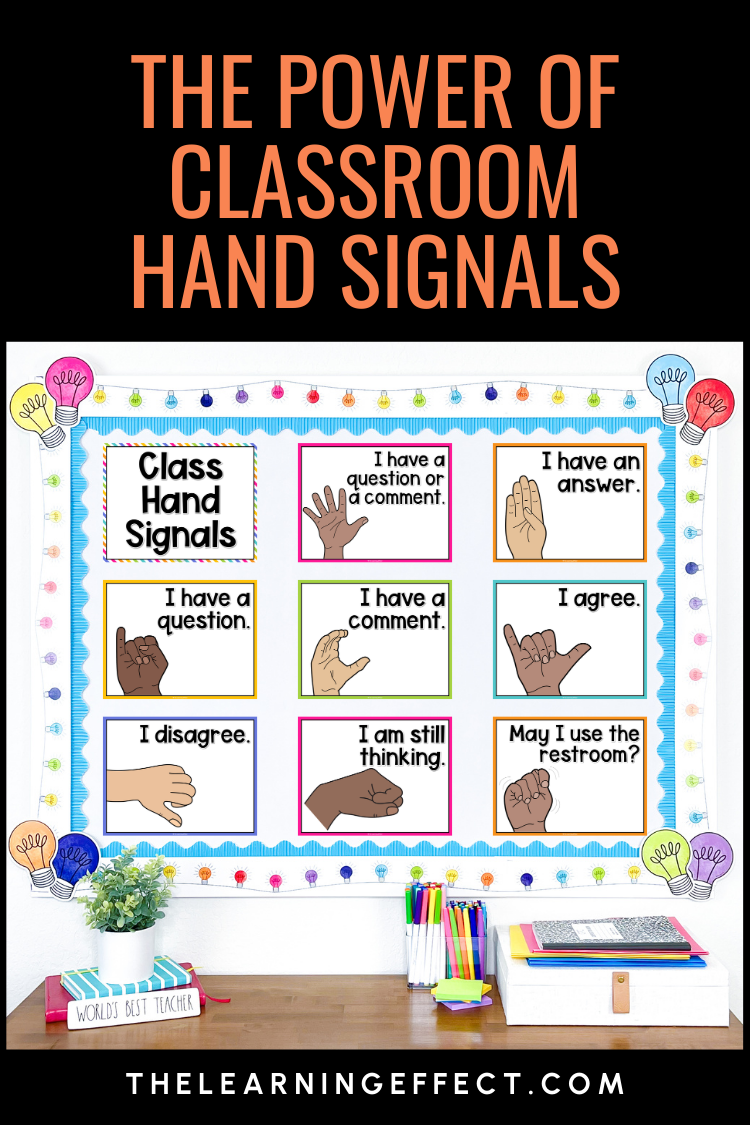
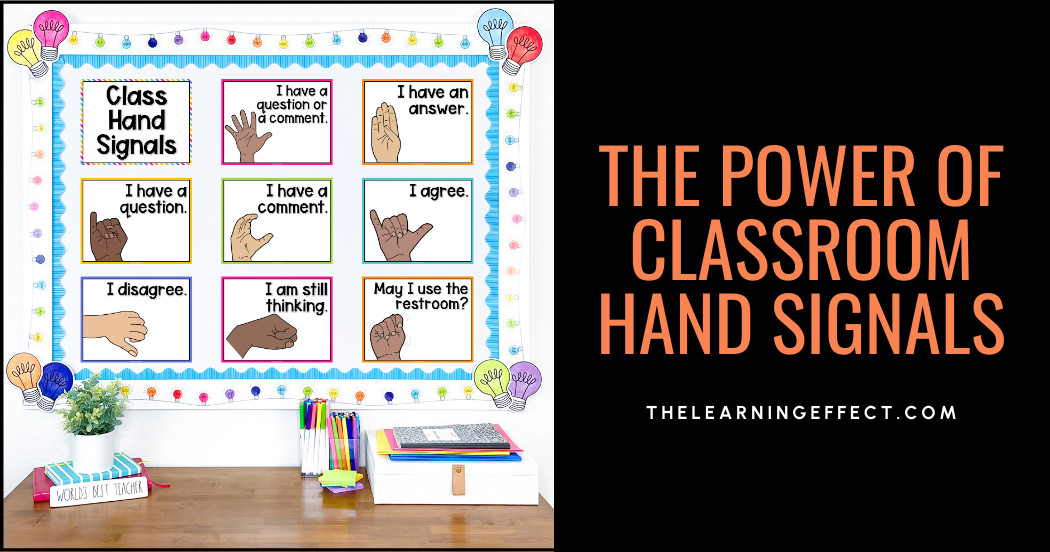
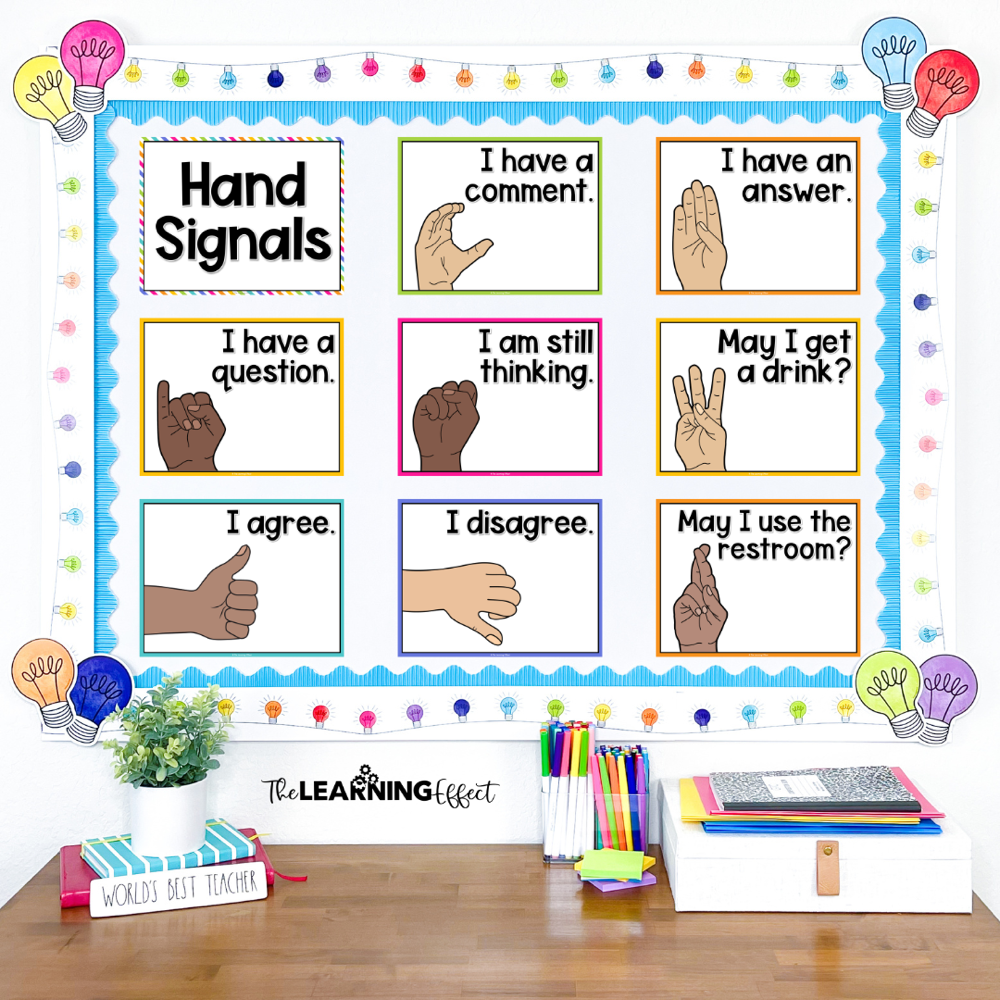
- C sign: “I have a comment”
- 4 fingers up, thumb across palm: “I have an answer”
- Fist with pinky up: “I have a question about the lesson”
- Fist: “I am still thinking”
- Thumb up: “I agree”
- Thumb down: “I disagree”
Classroom Needs Signals:
- Two fingers crossed: “May I use the restroom?”
- Three fingers up: “May I get a drink?”
The beauty of classroom hand signals is that students can communicate their needs without interrupting instruction, and you can respond with a simple nod or gesture to acknowledge them.
How to Successfully Implement Hand Signals in Your Classroom
Start with the Basics Begin by introducing just 3-4 essential classroom hand signals. I always started with bathroom, tissue, question, and answer signals since these covered 90% of student needs.
Make It Visual Post clear visual reminders around your classroom. I hung my hand signal posters near the front board where students could easily reference them. Having diverse, inclusive visuals helped all my students see themselves represented.
Practice During Low-Stakes Times We practiced our classroom hand signals during morning meeting or transition times before using them during lessons. This helped students feel confident using the system when it really mattered.
Be Consistent The key to success with any classroom management system is consistency. I used the same hand signals every day, and students quickly internalized the routine.
The Game-Changing Benefits I Experienced
Once my students mastered our classroom hand signals, everything changed. During lessons, I could nod to kids who needed something unrelated to our learning, like a bathroom break or tissue. While working with small groups, I could quickly see if a student needed help without any verbal interruption.
Not only did this communication system help my students become more responsible and respectful, but it also saved tons of instructional time. No more stopping mid-sentence to address every raised hand – I could keep teaching while still meeting student needs.
My administrators noticed the difference too. They often commented on how engaged and focused my students appeared during observations. The secret? Classroom hand signals eliminated those constant, small disruptions that can derail a lesson.
Ready-Made Hand Signal Posters for Your Classroom
Want to try classroom hand signals without the prep work? I’ve created Hand Signal Posters that come ready-to-print or fully editable to match your classroom needs.
These posters feature diverse, inclusive illustrations and cover all the essential classroom hand signals you’ll need. You can customize them in the editable PowerPoint version to add your own signals or match your classroom fonts and colors.

What Teachers are Saying
These hand signals with editable meanings are awesome! I use them to post the hand signals across the front of the classroom so students are always aware of how to ask for certain things. These come in so many different shades of skin color and make the classroom more diverse and represent all students! I love these! ⭐️⭐️⭐️⭐️⭐️ Alexander H.
I love the editable powerpoint! I can change the font to match some of my other classroom labels for consistency. I can also add my own clipart/images of what each signal means, as a visual support of my pre- and early readers! This set is well-designed and includes a wide variety of signals, including some that are harder to find in other sets. Love it, love it, love it! ⭐️⭐️⭐️⭐️⭐️ Celyn B.
Transform Your Classroom Communication Today
Classroom hand signals are one of those simple strategies that deliver huge results. They’ll help you maintain lesson flow, reduce interruptions, and create a more respectful learning environment where every student’s needs are met efficiently.
If you’re ready to experience calmer lessons and better classroom management, grab your Hand Signal Posters and start implementing this game-changing system tomorrow. Your future self (and your students) will thank you!
Looking for more classroom management strategies? Check out 10 Classroom Management Tips for Upper Elementary for additional ways to create a positive learning environment.