It’s far too easy to get stuck in a funk mindset where the smallest things can irritate you. By mid-year, I’d start to feel that little nag in the back of my mind focusing on the ridiculous things my students were doing. It made me miserable.
Adding positive notes for students to my weekly routine helped quiet that nag and completely transformed my teaching. Taking the time to watch for positive behaviors and letting students know I noticed changed my classroom management and culture immediately. Who knew this small gratitude practice would significantly impact both my students and me as a teacher?
Why Positive Notes for Students Work
When you can specifically pinpoint one positive thing a student has done and write about it on a note they can take home, it means so much more than general praise. Celebrating hard work on a math problem, noticing they asked a friend to play at recess, or acknowledging their participation in a discussion creates lasting impact – for both the student and their parents.
Using encouraging notes had the most significant effect on my students with challenging behaviors. They were the ones I’d see pulling out a note I wrote them months ago and reading it on a hard day.
How to Start Writing Positive Notes for Students
Choose Your Focus Students
I started this practice by focusing on a few students each week and actively watching for awesome things they were doing. I kept a simple checklist to ensure I noticed every student each month.
Some weeks were more challenging than others, but I could always find something for my focus students. It could be that they were kind, had a good attitude, or participated in a group as a great teammate. Anything big or small counted.

The Simple Process
I wrote a quick note and stuck it inside the student’s desk along with a piece of candy, raffle ticket, or school buck for them to find later. I also took a picture of the note and sent it to parents through ClassDojo’s messenger.
If I had a few extra minutes, I’d include a message thanking them for sharing their incredible child with me.
Using encouraging notes had the most significant impact on my students with challenging behaviors. They were the ones who I’d see pulling out a note I wrote them months ago and reading it on a hard day.
3 Benefits of Positive Notes for Students
- Build stronger relationships by letting students know you notice them and their efforts
- Create positive parent connections by taking time to recognize amazing things their child is doing
- Help you see the good in challenging students and let them know how much you appreciate their efforts
Getting Started This Week: Your Quick Action Plan
Ready to try positive notes for students in your classroom? Here’s how to start immediately:
- Pick 3-5 students to focus on this week
- Watch for one specific positive behavior from each student
- Write a brief note mentioning exactly what you noticed
- Add a small treat or classroom token if you use them
- Take a photo and share with parents through your communication app
You can easily use a sticky note or piece of paper to write these encouraging messages. The key is being specific about what you noticed and why it mattered.

Ready to Try It In Your Classroom?
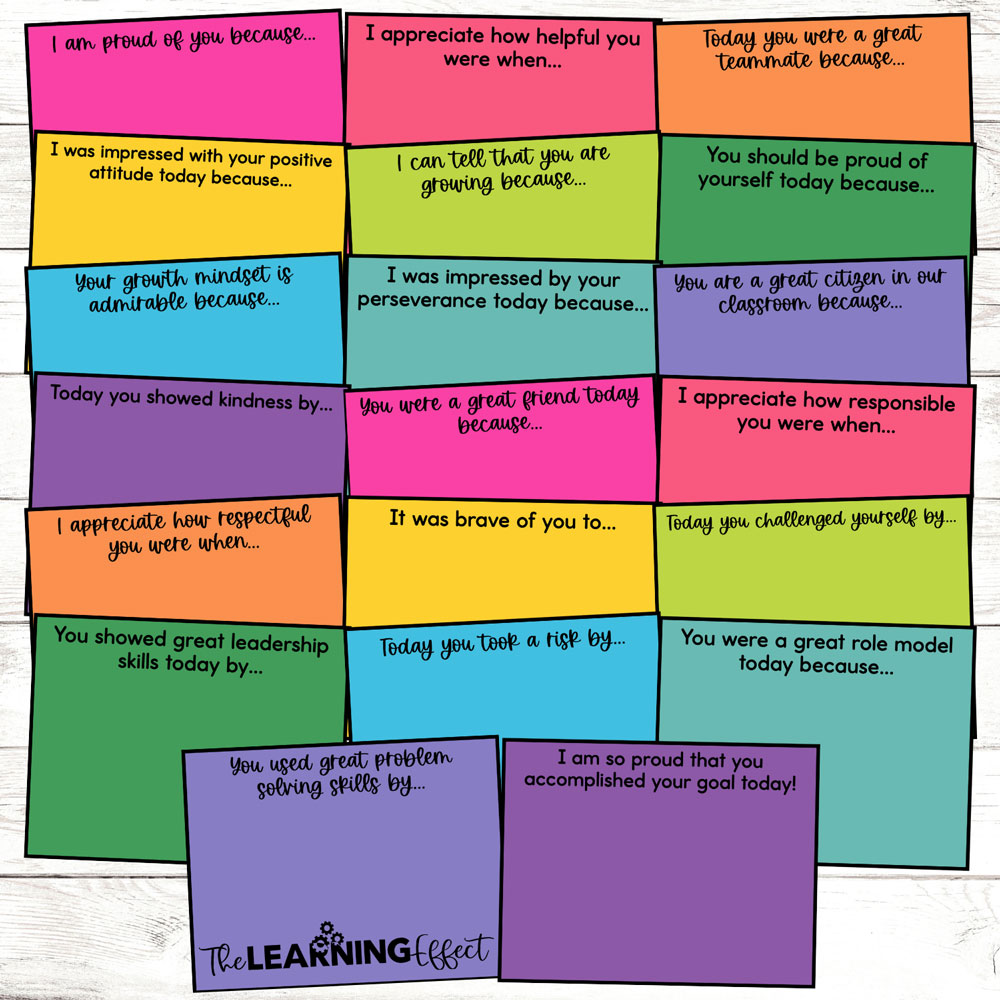
While you can absolutely start with simple sticky notes, having pre-made Positive Notes for Students can save you precious time and ensure you always have encouraging messages ready to go.
If you’d like pre-made positive notes with sentence starters that you can print and write on, I have 20 different note templates ready to go! These colorful, engaging designs make it easy to quickly write personalized messages that students will treasure.

What Teachers Are Saying About Positive Notes
I love sending these notes home with students and they look forward to getting them and showing their parents/guardians at home! ⭐️⭐️⭐️⭐️⭐️ Kayse E., 5th grade teacher
I used this resource with my middle school students and it worked wonderfully! The directions were clear, the content was age-appropriate, and it kept my students engaged from start to finish. I appreciated how easy it was to implement—just print and go! It also encouraged great discussion and critical thinking. Highly recommend for any teacher looking for a solid, ready-to-use resource. ⭐️⭐️⭐️⭐️⭐️ Mackenzie N., 6th & 7th grade teacher
Quick and easy way to let kiddos know how they’re doing, or to give a quick boost. I simply copied onto colored paper and I try to slip one or two to students each day. ⭐️⭐️⭐️⭐️⭐️ Kristin K., 6th grade teacher
Frequently Asked Questions
How often should I write positive notes for students?
Aim for 3-5 notes per week, rotating through different students. This ensures everyone gets recognized within a month without overwhelming your schedule.
What if I can’t think of anything positive to write?
Start small! Notice effort, kindness to classmates, following directions, or even just having a good attitude. Sometimes the smallest acknowledgments mean the most.
How long should positive notes for students be?
Keep them brief – 1-2 sentences work perfectly. Be specific about what you noticed: “I saw you help Sarah find her pencil today. Your kindness makes our classroom a better place!”
Why This Practice Will Transform Your Teaching
It’s worth taking the time to implement positive notes for students, especially if you have a challenging class. This practice will help you see the good in each student and shift your perspective in powerful ways.
Writing positive notes for my students helped me through some really rough teaching years. The simple act of looking for good things changed how I viewed my most difficult students and reminded me why I became a teacher in the first place.
I know it can help you too. Start small, be consistent, and watch how this one change creates ripples of positivity throughout your entire classroom community.
Looking for more ways to build positive relationships with your students? Check out these classroom management tips for upper elementary that will help create the supportive environment where both you and your students can thrive.