After five years on a traditional calendar, I made the switch to year round – and it completely changed how I experience teaching. Here’s my honest take on both, including what surprised me most about the transition.
Let me start with this: every school environment is unique, and so is every teacher’s experience. What I’m sharing here is purely my perspective after teaching on both types of calendars. I don’t have children of my own, so I can’t speak to how either calendar affects family life at home – just what it’s been like for me in the classroom.
What Is a Year Round Calendar?
A year round calendar (sometimes called a balanced calendar) spaces breaks more evenly throughout the year instead of having one long summer. Students typically attend for 9 weeks, then have 3 weeks off, repeating this cycle throughout the year.
This schedule allows schools to serve more students by having different groups (called “tracks”) rotate through the building. At my school, for example, we have four tracks per grade level, and one track is always on break while the other three are in session. It means school starts earlier—we begin in early July and end in late June.

Why I Wanted to Try a Year Round Calendar
As a childless introvert, I often found summer breaks somewhat boring after the first few weeks. And during the traditional school year? That stretch from January 2nd to the end of May felt endless. With so few breaks, I could feel myself – and my students – starting to drag by March.
A year round calendar had always appealed to me, but when I was teaching in Utah, I didn’t have the option. Once I decided to move to North Carolina, finding a year round school became one of my top priorities.
I moved at the end of May 2016 and started my new position at a year round school in early July. Since I had some time off between jobs, that first transition wasn’t difficult. What was strange? Taking my first 3-week break in August while all my teacher friends back in Utah were just starting their school year. I didn’t have much to do yet, being new to Raleigh, and three weeks felt a bit long. But it was still better than having three months off at once with no real plan.
By the end of that first year, I was completely sold. My burnout rate had decreased dramatically, and so had my students’. The summer slide didn’t exist anymore. Having “an end in sight” every nine weeks helped when I started to feel twitchy from telling students for the thousandth time to look at the whiteboard for instructions. This schedule was simply better for my overall wellbeing.
Year Round Calendar: Pros and Cons for Teachers
After several years on a year round calendar, here’s what I’ve learned works well – and what doesn’t.
The Pros
Reduced burnout: This is the biggest benefit. More frequent breaks mean I don’t hit that exhausted wall that comes from teaching straight through for months on end. My students feel it too – they come back from each break ready to learn instead of checked out and counting down the days.
Better vacation pricing and availability: With breaks in August, November, February, and May, I can travel during off-peak times when the rest of the world isn’t on vacation. That means lower prices and fewer crowds wherever I go.
Easier to schedule appointments: Knowing I’ll be off every nine weeks makes it simple to schedule doctor visits, car maintenance, haircuts, and other life tasks without using precious PTO during the school year.
No summer slide: My students retain what they’ve learned because we’re never away from school long enough for significant learning loss. When we come back from break, we can jump right back in with minimal review time.
More time to teach before testing: We take our state end-of-grade tests the second-to-last week of school in late June. This means I can teach the entire curriculum at a reasonable pace without the pressure of finishing content a month and a half before school ends like I did in Utah.
Easier material sharing: My grade-level teammates and I are typically in different places in the curriculum due to our staggered schedules, which makes it easier to share materials and resources without competing for the same supplies at the same time.

The Cons
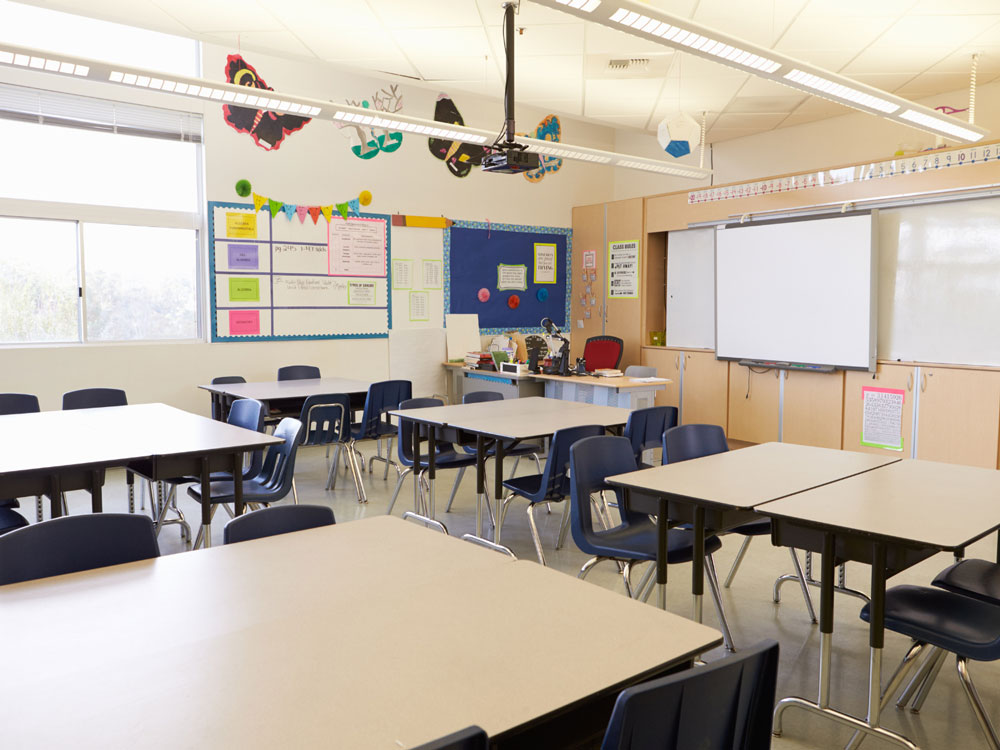
No personal classroom: This was really hard for me at first. I don’t have ownership of my own space. I’ve chosen to simplify by not maintaining a personal class library, extensive supplies, or elaborate classroom decor. I move into different rooms throughout the year and have to take everything down when I track out because another teacher needs that space. On track-out days, I’m literally moving out while the next teacher is trying to move in. We make it work, but it’s definitely a challenge.
Quick turnaround between school years: This is especially tough for certain tracks. Some of us end school on June 30th and start again on July 3rd for professional development, with students arriving July 10th. There’s no summer break buffer to reset and prepare. Even stranger? Meet the Teacher happens two weeks before the current school year ends.
Less time for deep planning: One thing I loved about summer break was spending weeks on curriculum mapping. Now I have much less time for that kind of detailed planning work between school years.
Is a Year Round Calendar Right for You?
Here’s my honest recommendation: a year round calendar might be perfect for you if you struggle with burnout, prefer frequent shorter breaks, or find the January-to-May stretch on a traditional calendar exhausting. The more regular rhythm kept me healthier and happier as a teacher.
However, there are real tradeoffs. If you value having your own classroom space, love doing deep curriculum planning over a long summer, or have school-aged children on a traditional calendar, the logistics might not work as well. The quick turnaround between school years can be jarring, and sharing classroom space requires flexibility and a willingness to let go of some control.
For me? I really do prefer the year round schedule. The benefits to my mental health and my students’ learning outweigh the challenges. But I also recognize it’s not for everyone – and that’s okay.