Some years, classroom management comes naturally – you actually get to teach, and you remember why you love this job. Other years test every strategy you know. I’ve had both, and here’s what I’ve learned: the right classroom management techniques make those tough years not just survivable, but successful. These 10 classroom management tips have been my lifeline.
1. Hand Signals: A Silent Classroom Management Tool
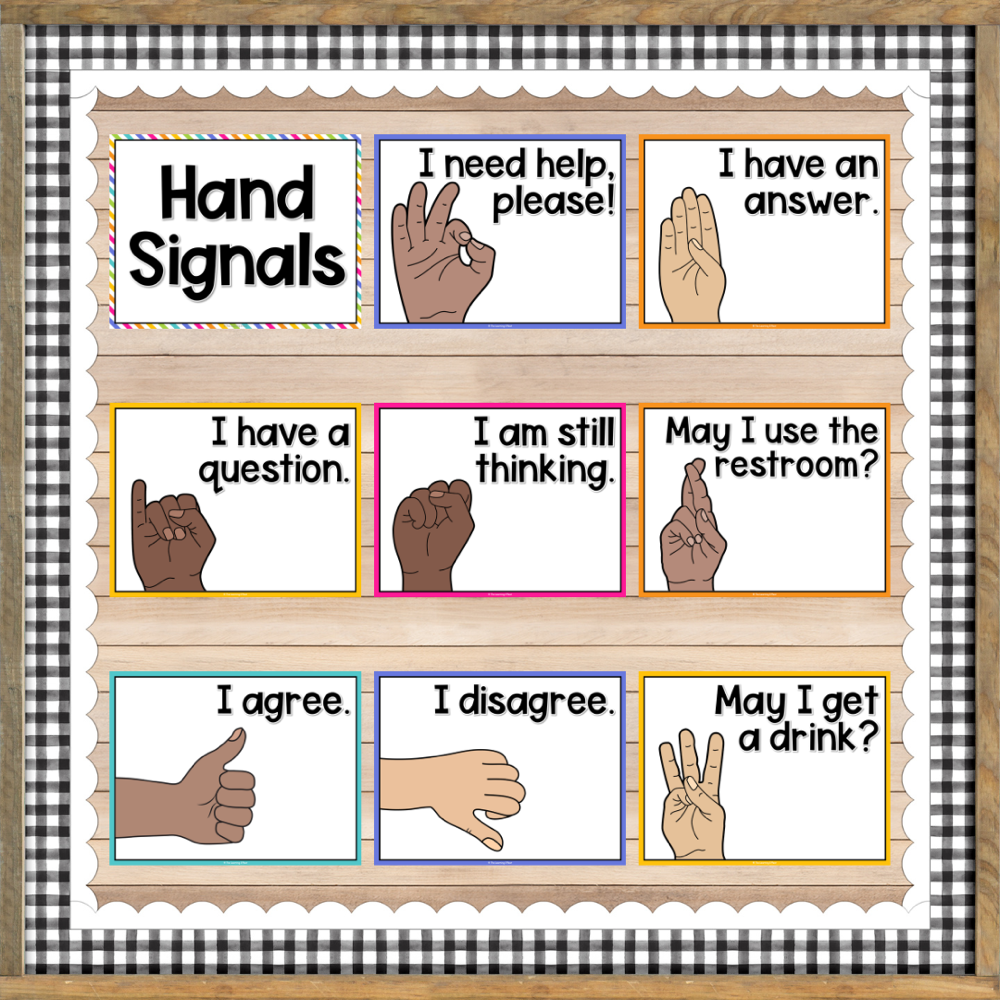
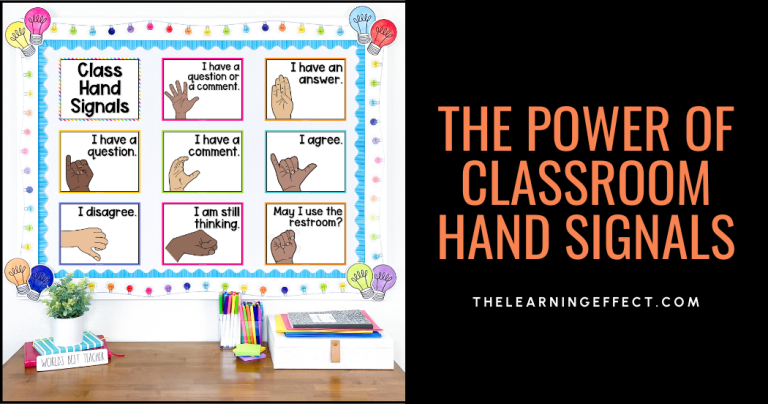
Hand signals have saved my sanity. With hand signals, students can silently let you know what they need. I love that I can easily distinguish between a question, answer, and comment – that way, I can save the comments for later if we’re crunched for time.
When I taught 6th grade, I didn’t need signals for getting a drink, sharpening a pencil, or using the bathroom since students were free to do those things whenever I wasn’t teaching. I created editable hand signal posters you can customize to fit your classroom’s needs.

2. Countdown Timers
Using a countdown helps students know how long they have to finish something. No more excuses of, “I didn’t know how much time we had left, so I didn’t finish.” Hold students accountable for monitoring their time.
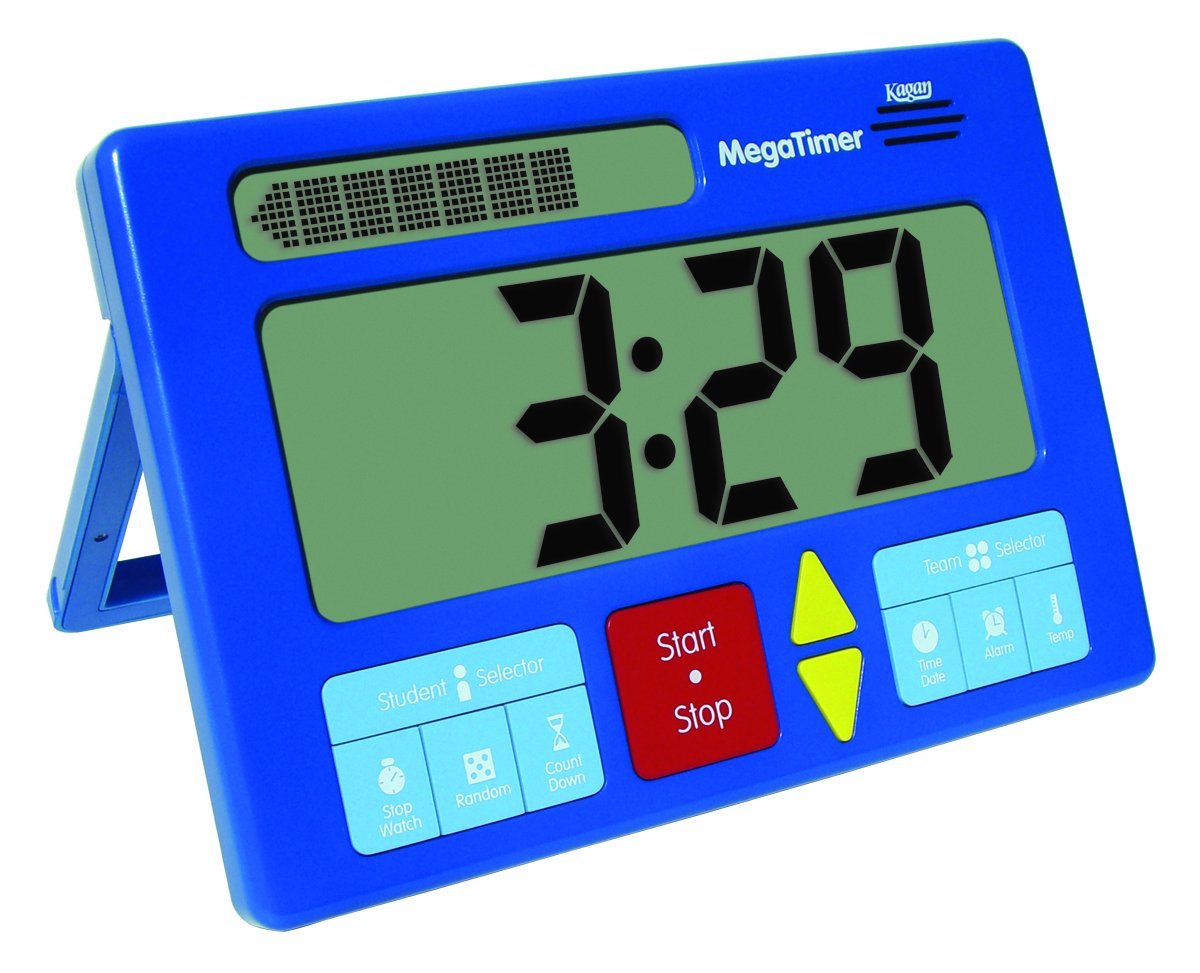
My school invested in Kagan Cooperative Learning, and we got the Kagan MegaTimer. It’s pricey, but I use it constantly. The timer also works as a clock, thermometer, random number generator, student number picker, stopwatch, and more.
If you have technology available, you can use apps or websites like Online Stopwatch to count down.
During transitions, I count down aloud from 10 to signal that I’m ready to begin. This helps students stop the chatter and get situated for our lesson.
As an Amazon Associate, I earn from qualifying purchases through affiliate links.
3. ClassDojo for Classroom Management

I’ve used ClassDojo across grades 4, 5, and 6, and it remains my favorite classroom management tool. I can reward positive behaviors and track areas where students need support – all while keeping parents in the loop without extra work on my end.
That parent communication piece? Game-changer. I don’t have time to send home notes, email, or call every single day. With ClassDojo, parents can check in whenever they want to see what awesome things their child did or what they need to work on.
The messenger feature beats email every time. A quick reminder from a parent about an early pickup is helpful, but I don’t have time to monitor my inbox all day. Having the app on my phone and iPad means I can award points throughout the day and get alerts when parents message me.
For a deeper dive into how I set up my positives and negatives, check out my post on using ClassDojo in upper elementary. I also share how I integrate it with my whole class reward system.
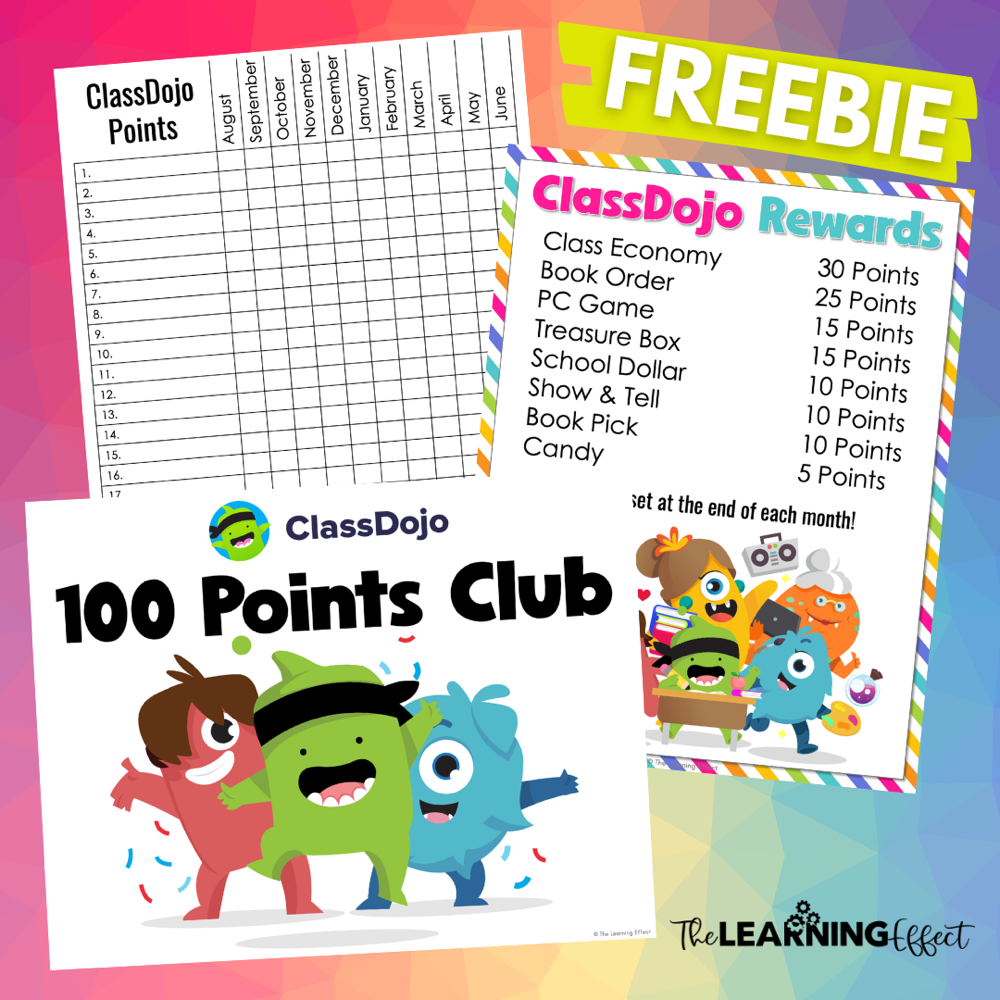
⭐️ Download a free ClassDojo rewards resource.
4. Positive Notes for Students
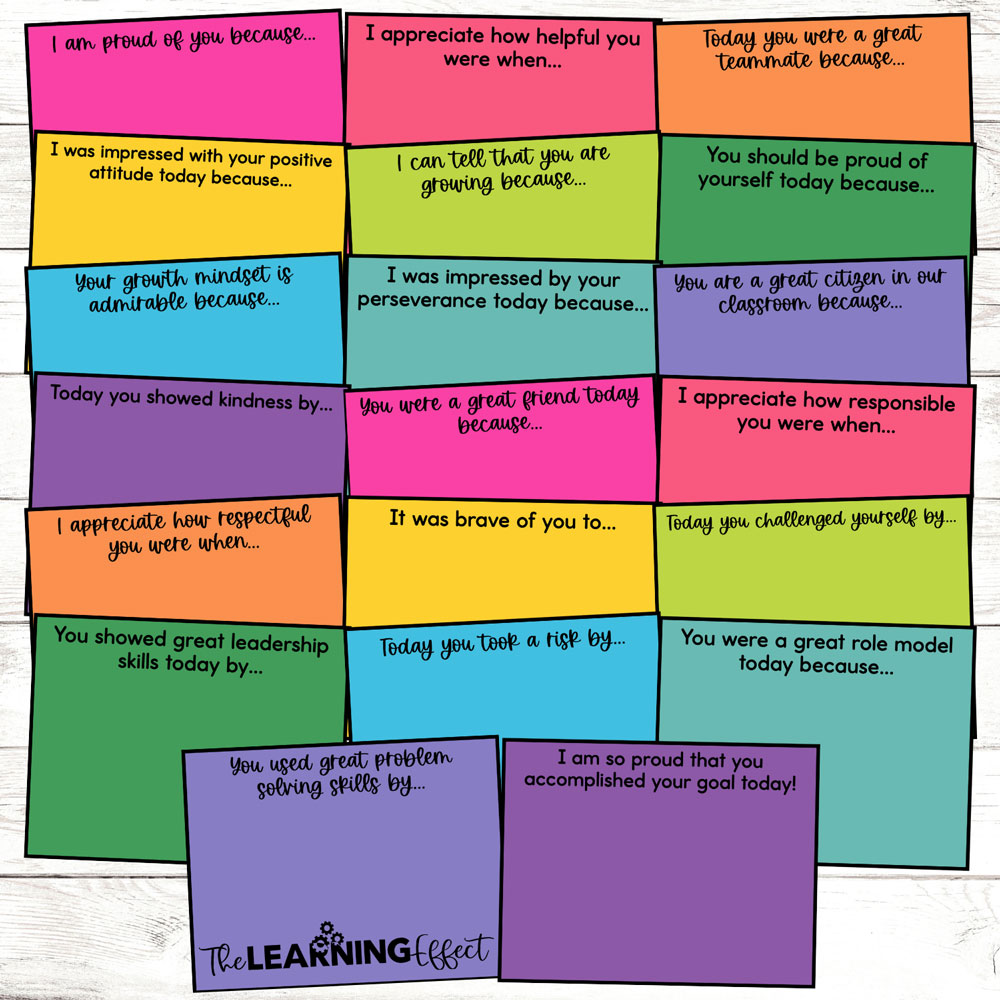
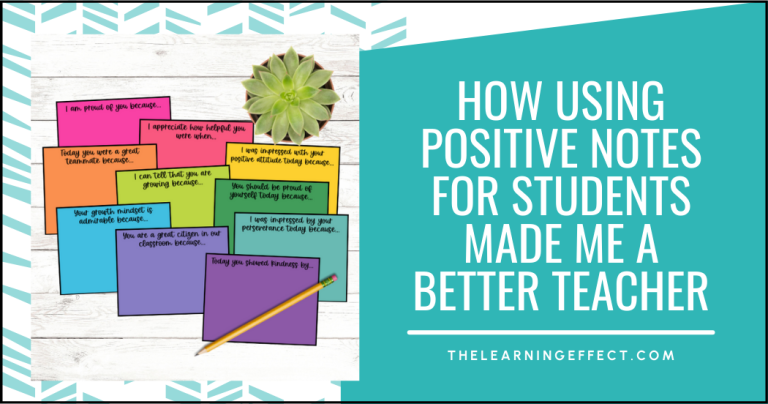
Students, no matter what their age, appreciate some encouragement from their teacher. I’ve caught students pulling out a past note from their desks to re-read when they’re having a rough day. Totally worth the time to do this!
I print these notes on colored paper (like Astrobrights) and keep them on hand when I see something worth celebrating. I’ll stick a note into a student’s desk along with a piece of candy, raffle ticket, or school buck for them to find later. I also take a picture of the note and send it to parents on ClassDojo’s messenger with a thank you for sharing their child with me.
Writing positive notes to students is powerful. Even a quick note on a Post-It works! Even my most challenging students treasure a positive note from me. It’s a nice reminder that they’re capable of great things.

As an Amazon Associate, I earn from qualifying purchases through affiliate links.
5. Practice Procedures Consistently
This is one classroom management strategy I return to again and again. When procedures aren’t working, practice them. Sometimes the whole class needs a refresher on walking in line or raising hands during lessons. I’ve taken 5 minutes of recess to practice hallway behavior – and that was all it took for the rest of the year.
Other times, one student needs individual practice. I’ll walk a couple laps around the track with them during recess. Yes, it’s my break time, but those 5 minutes of one-on-one connection often reveal what’s really going on. Usually? They just need attention, and giving it proactively beats dealing with disruptions all day.
6. Teamwork Bingo
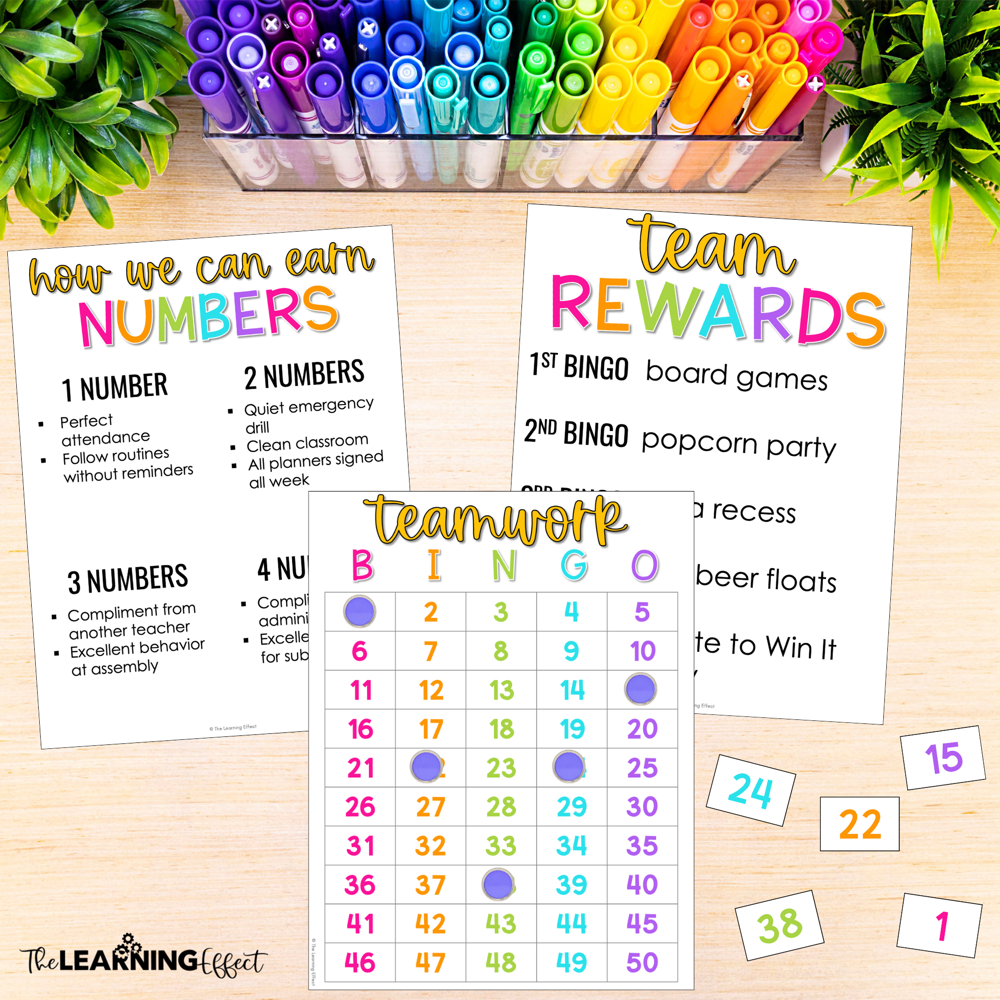
Teamwork Bingo is an easy way to encourage students to work together and do the right thing. As a class, you can decide what earns numbers and what prizes can be earned. When students earn numbers, draw from a can and mark off the number. I laminated my bingo board and used a wet-erase marker to track our progress.
⭐️ Download a free Teamwork Bingo resource.
7. Echo Directions
I have my students echo directions back to me before letting them begin independently. They tell me where to turn something in, what to do when they finish, whether they’re doing odds or evens – all of it. If they say it back to me, I know they’ve heard what I said. Sure, some still won’t remember, but then I have them ask 3 before me.
8. Attention-Getting Signal for Quick Transitions
Having an attention-getting signal has been helpful at all grade levels. I use “Give Me 5” with my students. This allows me to get my class’ attention quickly, and it’s both visual and auditory. Students stop what they’re doing, face me, and put their hands up in the air. Even if someone doesn’t hear me, they know what to do when they see others with their hands up.
9. Monitor Noise Levels
I appreciate a mostly quiet classroom while students work. Of course, students don’t realize the noise level when working in groups, so they need a way to monitor expectations.
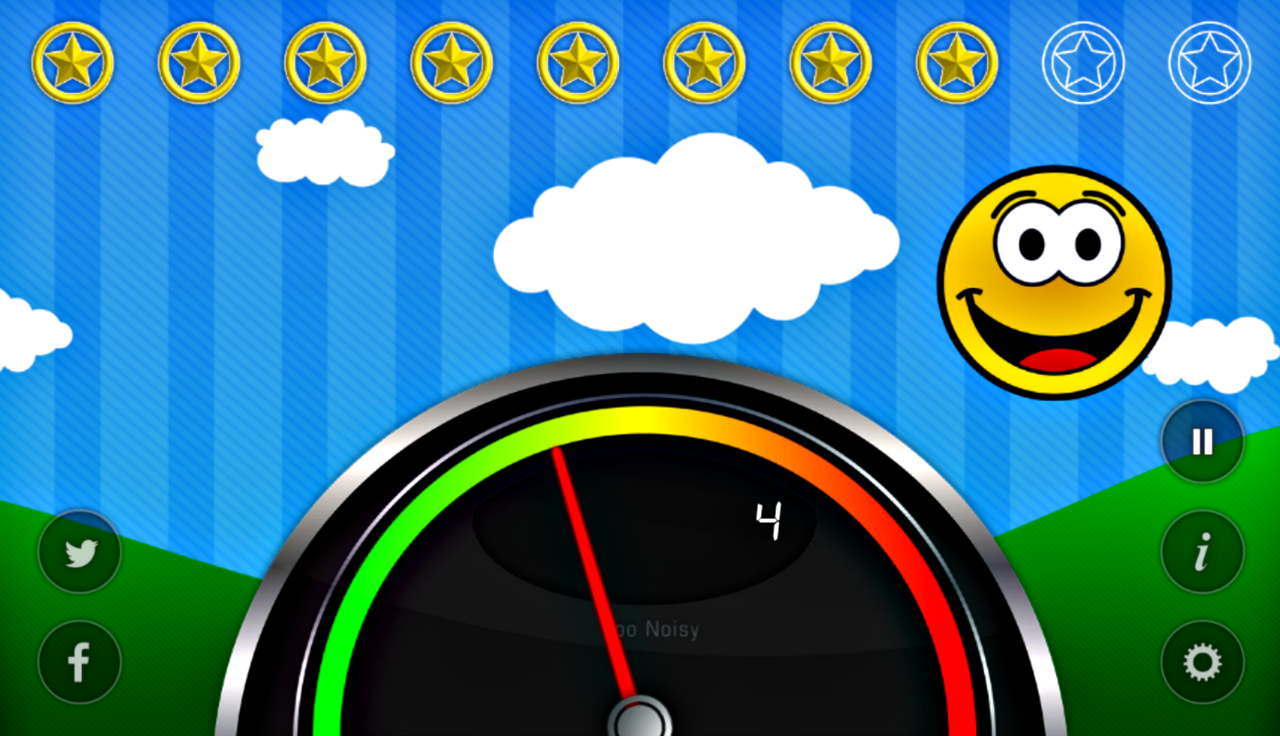
A fun app available for both Android and iOS is Too Noisy. It uses the microphone on a tablet or phone to monitor noise levels. (You can adjust the sensitivity depending on what’s appropriate for the activity.) The class earns stars if they don’t “break” the screen. There’s both a free and paid version.
Another way to manage noise is with voice level posters that show students the expected voice level visually. You can move an arrow or clip along the posters to indicate expectations for each activity. I make it a class job to move the arrow because I always forget!

10. Brain Breaks
Who doesn’t need a brain break every once in a while? I know I do when I’m working at home. Basically, anything to get kids out of their seats works as a brain break. But even better? Getting their wiggles out with GoNoodle.
GoNoodle is completely free for teachers. Grades 4, 5, and 6 love it – and my 6th graders were the biggest fans. You can search by energy level, category, duration, and even mark favorites for quick access. Doing a calming meditation before a test helps kids get their minds right. Stretching before recess gets students pumped up to play. Starting the day with a guided dance gets their blood pumping and brains turned on.
Effective classroom management doesn’t happen overnight – it takes consistency, patience, and the right strategies. Start with one or two tips that resonate most with your teaching style and build from there.
Links last updated 11/01/2025.